
Cosmic Forges: The Role of Supernova Explosions in Cosmic and Human Evolution
In the night sky, stars seem motionless and eternal, but they are actually gigantic cosmic chemical factories.
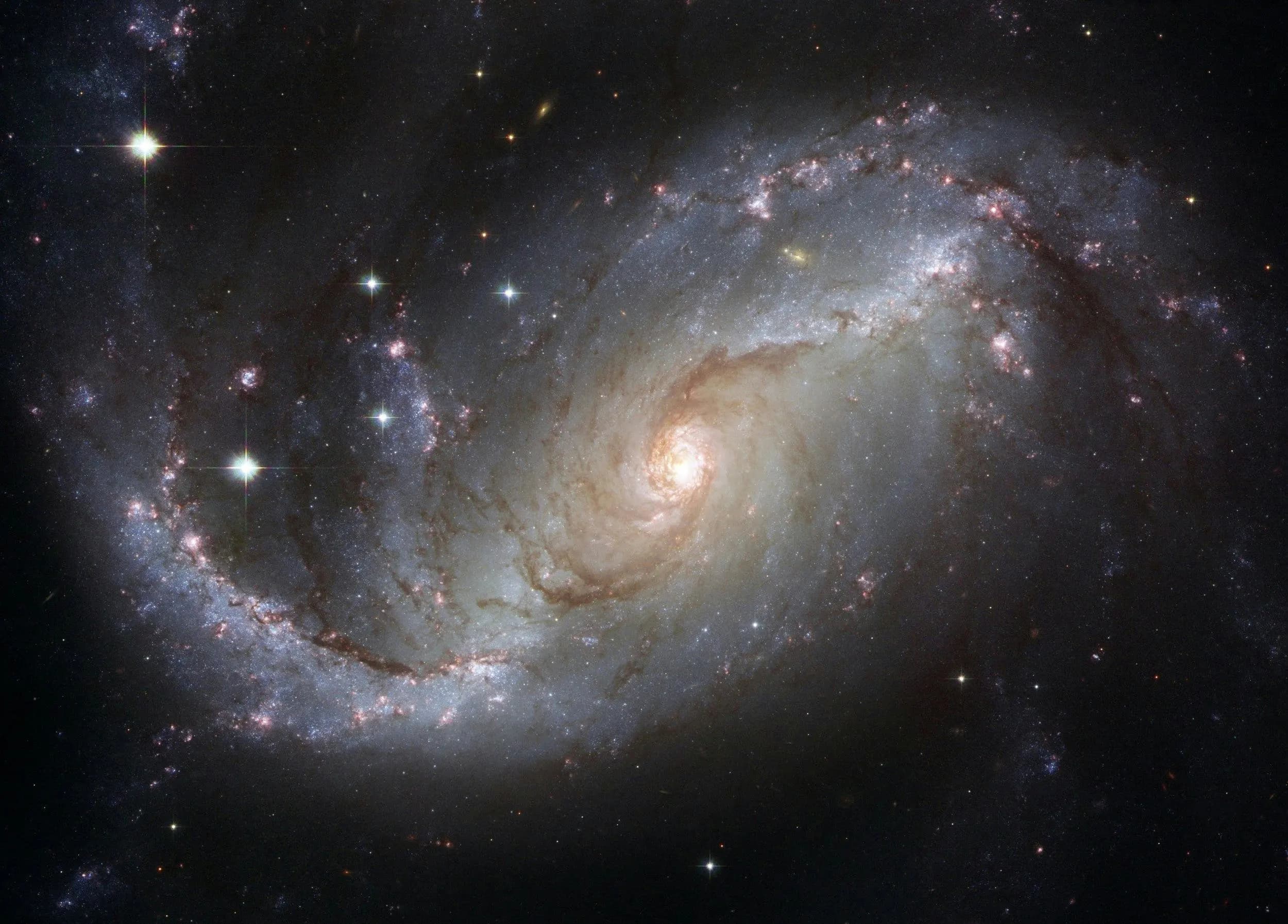
Throughout their lives, stars fuse light chemical elements - hydrogen and helium - into heavier ones. But when a massive star runs out of fuel, it dies in a colossal explosion - a supernova - which is not just a cosmic fireworks display but the very foundation of our world and our existence. This immense explosion enriches the cosmos with new elements, creating the basis for new stars, planets, and even life itself.
The Physics of Supernova Explosions and the Origin of Elements
The main driving force of a star's life is nuclear fusion, which takes place in its core. During this process, light atoms merge to create heavier ones, releasing a tremendous amount of energy. This energy is what counteracts the star's own gravitational pull. However, this process can only continue up to the creation of iron (Fe). Iron has the most stable nucleus, and its fusion doesn't produce energy; it consumes it. At this point, the star's core loses its internal pressure and begins to collapse rapidly.
The star's outer layers, which fall onto the core, "bounce back," creating a powerful shockwave that ejects all the star's material into space. It's during this monumental explosion that the extreme temperatures and pressures allow for the creation of all the heavy elements on the periodic table that are heavier than iron. This is why all the precious metals in our world, such as gold, silver, uranium, and platinum, were created as a result of supernova explosions.
The Connection of Supernovas to Our Existence
Our solar system, including Earth and all living beings, was formed from these materials. We are, literally, "stardust."This scientific fact shows that every atom in our body - the carbon that forms our DNA or the calcium that strengthens our bones - was created billions of years ago in the core of a star and scattered throughout the cosmos as a result of a supernova explosion.
The famous phrase "We are made of starstuff" belongs to the great scientist Carl Sagan. This statement is not only poetic but also accurately describes our origin.
On average, a supernova explosion occurs in our galaxy once every 50 to 100 years. These explosions, which are mostly invisible to us, enrich the cosmic environment with the materials necessary for the creation of new stars, planets, and, possibly, life. They are an inseparable part of the cosmic cycle of rebirth.
Supernovas are not only one of the most powerful phenomena in the universe but also tools for the continuous process of life. They are the eternal forges of the cosmos, creating the very materials our world is built from. By understanding the role of supernovas, we better understand the meaning of our own existence and our connection to the universe.
Related articles

 SpaceOctober 13, 2025
The Great Attractor: The Invisible Pull of the Cosmic Abyss
14 min read SpaceSeptember 8, 2025
Secrets of the Airplane's "Black Box": What It Really Is and How It Saves Lives
7 min read TechnologyAugust 26, 2025
The Paradox of the Future: Why We Fear the Next 100 Years
3 min read SpaceAugust 26, 2025
The Era of Space Junk: Humanity's Invisible Pollution
3 min read SpaceAugust 25, 2025
Mars's Aqueous Past: The Invaluable Discovery of the Curiosity Rover
2 min read HistoryAugust 21, 2025