
The Four Astronauts and a Hopeless Return: The Incredible Story of Apollo 13
The history of space exploration is filled with courage, risk, and scientific genius. But few stories are as dramatic and inspiring as the fate of the Apollo 13 spacecraft.
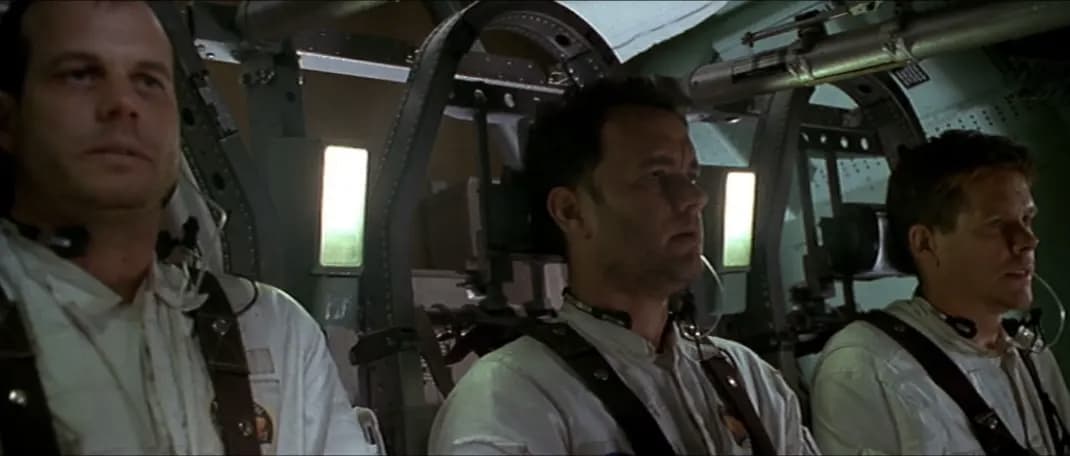
It began as a mission for the third lunar landing, but it quickly turned into one of the most difficult rescue operations in human history - a tragedy that became an immortal symbol of the triumph of the human spirit.
The Mission and the Explosion
On April 11, 1970, three astronauts - Jim Lovell, Jack Swigert, and Fred Haise - departed Earth, heading for the Moon. The mission initially proceeded smoothly, without any problems. Two days later, when the spacecraft was about 320,000 km from Earth, something terrible happened. There was an explosion in the chain of the second oxygen tank. The explosion destroyed not only that tank but also the adjacent first tank, immediately depriving the spacecraft of electricity and water.
Lovell immediately contacted Houston and uttered the historic words: "Houston, we have a problem." These words marked the beginning of a chaotic event that threatened to end the space program. Within minutes, the astronauts and the ground team realized they were facing a situation for which no plan existed.
The Struggle for Survival
After the explosion, the lives of the crew were in danger. They were forced to abandon the command module, the main part of Apollo 13, and move to the lunar module, "Aquarius." This small module was designed for only two people and 36 hours, but now it had to become the temporary home for three astronauts, ensuring their survival on a long and difficult journey.
The challenges were unimaginable:
- Freezing Cold. To conserve electricity, they had to shut down almost all systems. The temperature inside the module dropped to 3°C, and the crew suffered from the cold.
- Carbon Dioxide Buildup. The lunar module's carbon dioxide filters were designed for two people, and the command module's filters were not compatible. In Houston, scientists quickly developed an improvised solution using cardboard sheets, plastic bags, and tape.
- Navigation. It was necessary to precisely correct the spacecraft's course to return to Earth. The astronauts were forced to perform calculations manually and use the positions of the Earth and the Moon to find the right direction. This required unprecedented precision from the people.
A Triumphant Return
The whole world watched the spacecraft's journey with bated breath. The astronauts demonstrated incredible engineering ingenuity and psychological stability, while thousands of people in Houston worked together to ensure their return.
The most dangerous phase was entering Earth's atmosphere. After the explosion, there was a doubt about whether the spacecraft's thermal protection was still safe. But everything went well. On April 17, 1970, the spacecraft made a safe landing in the Pacific Ocean, and the astronauts were brought out.
The Apollo 13 mission did not achieve its goal of landing on the Moon, but it entered history as a celebration of engineering genius, collaboration, and the human spirit. It proved that even in the most hopeless situations, when people unite around a common goal, they can overcome the greatest difficulties. This story reminds us that victory is not always about reaching the goal, but about how we fight for it.
Related articles

 HistoryJanuary 7, 2026
Iran: From a Millennial Empire to the Strict Mandates of the Islamic Republic
5 min read HistoryJanuary 7, 2026
Venezuela: The Tragic Phoenix of Latin America - From Oil Paradise to Geopolitical Nightmare
6 min read LifestyleDecember 9, 2025
Festive Tables Around the World: New Year's Traditions and Their Flavorful Nuances
9 min read HistoryDecember 8, 2025
The Spitak Earthquake: History and Statistics of a Catastrophe (December 7, 1988)
7 min read HistoryNovember 17, 2025
The Horrifying but True Story of a 5-Year-Old Who Became a Mother
4 min read HistoryNovember 7, 2025