
Iran: From a Millennial Empire to the Strict Mandates of the Islamic Republic
Iran is a nation where the ancient glory of Persepolis meets the contemporary rigors of a theocracy. Today, Iran is often perceived through the lens of a closed state filled with prohibitions. However, to understand how it reached this point, one must look back at its history - specifically the fateful events of 1979 that changed everything.
Chapter 1: Pre-Revolutionary Iran: Imperial Luxury and Westernization
In the mid-20th century, Iran was ruled by Shah Mohammad Reza Pahlavi. Under his leadership, the country pursued a path of rapid "Westernization." The Shah aimed to transform Iran into a secular, modern, and powerful global player.
- The "White Revolution": The Shah initiated a series of reforms that included granting women the right to vote, land redistribution, and the massive expansion of the education system.
- Life in Tehran: During the 1960s and 70s, Tehran resembled a European capital. Women wore miniskirts, nightclubs were abundant, and Hollywood films played in crowded cinemas.
Yet, beneath this polished surface, deep discontent brewed. The Shah's regime was authoritarian, enforced by the brutal secret police, SAVAK, and wealth was concentrated in the hands of a small elite. Meanwhile, the religious masses felt their traditions were being systematically trampled.
Chapter 2: The 1979 Islamic Revolution
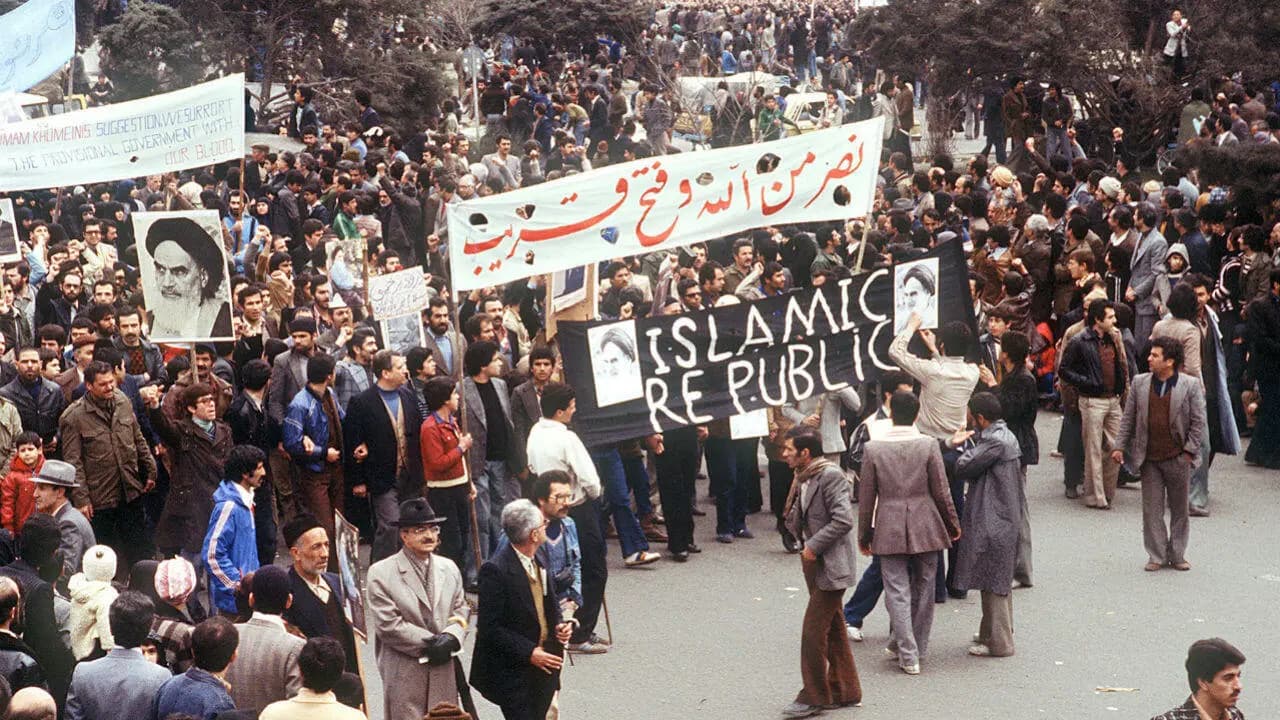
The revolution was not started by religious figures alone. It involved students, Marxists, liberals, and clerics—all united by a single goal: toppling the Shah.
- Ayatollah Khomeini: The spiritual leader, exiled in France, became the face of the revolution. His tape-recorded sermons were smuggled into Iran, calling for the overthrow of the "American puppet" (the Shah).
- Victory of the Revolution: In February 1979, the Shah fled the country, and Khomeini returned triumphantly to Tehran.
This moment marked the greatest turning point. While liberal forces hoped for a democratic Iran, the religious faction quickly consolidated power, declaring an Islamic Republic.
Chapter 3: The Institutionalization of Strict Prohibitions
Following the revolution, Iran adopted the system of Velayat-e Faqih (Guardianship of the Islamic Jurist). Sharia law became the mandatory framework for public and private life.
The Status of Women and the Hijab
The most drastic changes were seen in women's rights. While women were free to choose their attire before the revolution, by 1983, the hijab became compulsory for all women (including non-Muslims and tourists).
- The Morality Police (Gasht-e Ershad): This specialized unit patrols the streets to ensure women cover their hair properly and avoid wearing "provocative" clothing or heavy makeup.
Social Prohibitions
Several activities are officially banned or strictly regulated in Iran:
- Alcohol: The sale and consumption of alcohol are a criminal offense (with minor exceptions for certain religious minorities).
- Western Music and Dancing: Dancing in public is prohibited, and many forms of Western music are labeled "un-Islamic."
- Digital Censorship: Iran has some of the world's strictest internet filters. Platforms like Facebook, Twitter (X), and YouTube are blocked, though most citizens bypass this using VPNs.
Chapter 4: Confrontation with the USA and Sanctions
Relations between Iran and the USA collapsed in November 1979, when Iranian students stormed the U.S. Embassy in Tehran, holding 52 diplomats hostage for 444 days.
Since that day, Iran has been under severe U.S. sanctions.
- The Nuclear Program: The West accuses Iran of seeking nuclear weapons, leading to extreme sanctions that have paralyzed the economy and the oil sector.
- The "Axis of Evil": Washington views Iran as a primary state sponsor of terrorism in the Middle East, leading to a permanent state of geopolitical tension.
Chapter 5: Modern Resistance: "Woman, Life, Freedom"
Despite the strict laws, Iranian society—especially the youth—is remarkably progressive. In 2022, the death of Mahsa Amini (who died in custody after being arrested by the morality police for "improper hijab") sparked an unprecedented wave of protests.
Under the slogan "Woman, Life, Freedom" (Zan, Zendegi, Azadi), thousands of women publicly burned their headscarves. This was not just a fight over clothing; it was an eruption of decades of pent-up social and political frustration.
Chapter 6: Iran’s Cultural Duality
There are effectively two Irans:
- The Official Iran: Mosques, black chadors, and religious slogans painted on walls.
- The Underground Iran: Behind closed doors, people host parties, listen to modern music, discuss Western philosophy, and live fully modern lives.
Iranian cinema remains one of the best in the world. Directors like Asghar Farhadi manage to create masterpieces under the shadow of censorship, earning multiple Academy Awards and international acclaim.
Chapter 7: Iran and Armenia: A Centuries-Old Friendship
Despite the religious differences, Iran and Armenia maintain warm, strategic relations. Iran is one of the few countries where Armenian churches (such as the Monastery of Saint Thaddeus) are preserved and protected as national cultural monuments. The Armenian community in Tehran plays a vital role in the country's social fabric.
Iran is a country still searching for its balance between powerful traditions and the modern world. The strict prohibitions established after 1979 are now clashing with the aspirations of a new, globalized generation. Persian history teaches us that no mandate can fully suppress a people with such a deep-rooted cultural memory.
Related articles

 HistoryJanuary 7, 2026
Venezuela: The Tragic Phoenix of Latin America - From Oil Paradise to Geopolitical Nightmare
6 min read LifestyleDecember 9, 2025
Festive Tables Around the World: New Year's Traditions and Their Flavorful Nuances
9 min read HistoryDecember 8, 2025
The Spitak Earthquake: History and Statistics of a Catastrophe (December 7, 1988)
7 min read HistoryNovember 17, 2025
The Horrifying but True Story of a 5-Year-Old Who Became a Mother
4 min read HistoryNovember 7, 2025
Orpheus and Eurydice: The Love That Descended Into the Underworld
4 min read HistoryNovember 3, 2025