
Halloween: From Samhain Bonfires to a Global Phenomenon
What is Halloween, where did it come from, and is it religious? This comprehensive article analyzes the holiday's journey from the pagan rituals of Celtic Samhain to the Christian 'All Hallows' Eve' and its transformation into a modern, secular celebration.
Introduction: What is Halloween?
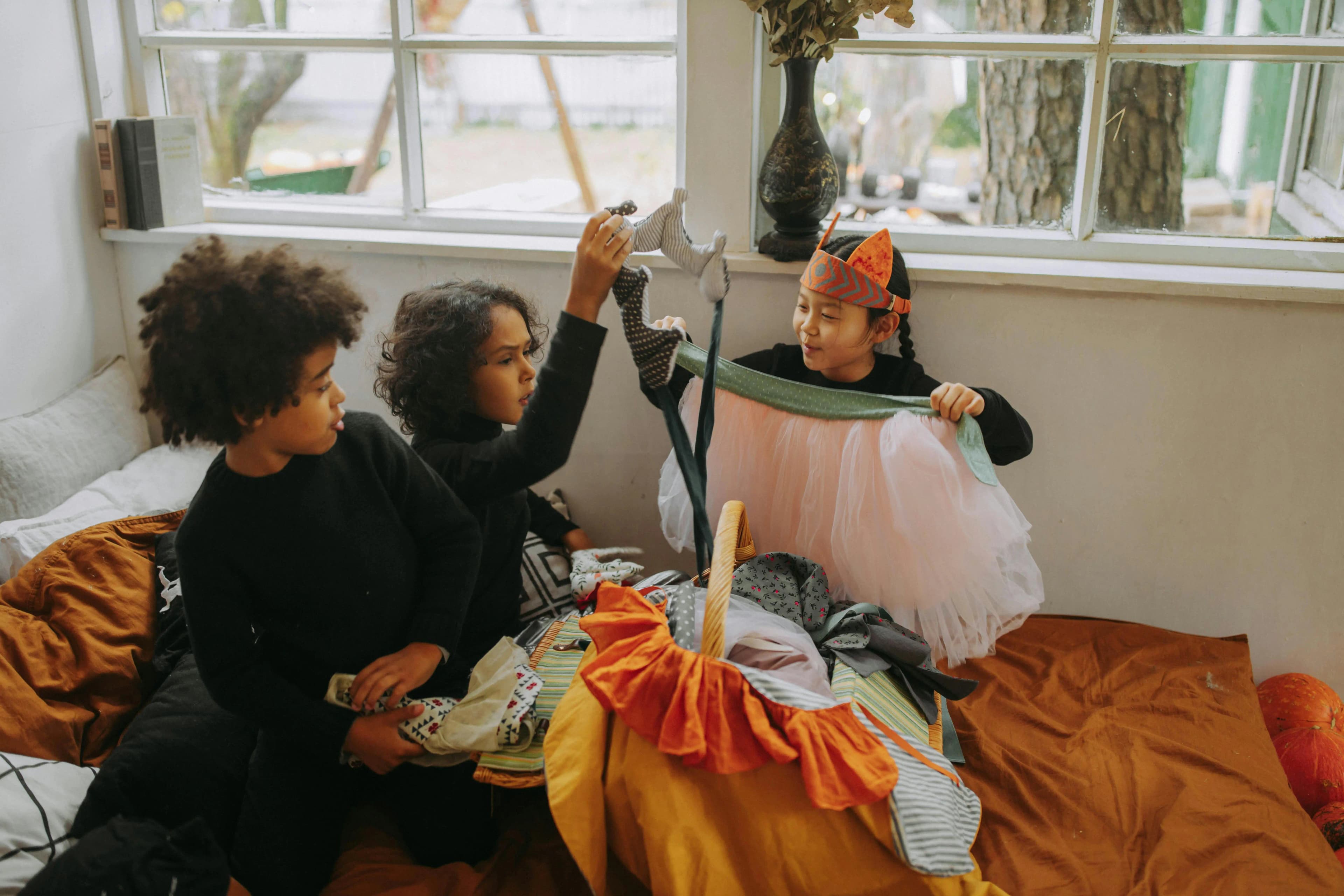
Every year, as the October leaves begin to fall and the air turns crisp, a strange transformation occurs in many parts of the world. Shop windows fill with cobwebs, skeletons, and witch hats. Mischievously grinning, carved pumpkins with candles burning inside appear on doorsteps. And on the night of October 31st, the streets fill with children dressed as princesses, superheroes, ghosts, and zombies, going from house to house uttering the magic words, "Trick or Treat." This is Halloween - a holiday that has become a multi-billion dollar industry and a global cultural phenomenon.
But behind this lighthearted fun and commercialism lies a deep, complex, and often misunderstood history. For many, it's simply innocent fun - an excuse to dress up and eat candy. For others, however, it's a questionable or even dangerous holiday, filled with pagan, occult, and grim symbolism. In many countries where the holiday is not native, it is often met with confusion or harsh resistance. After all, why do people voluntarily dress their children as monsters and send them to knock on strangers' doors?
So, where did Halloween come from? What is the meaning of the jack-o'-lantern? And the most important question: is this a religious holiday? The answer is not a simple "yes" or "no." It is a journey back in time, over 2,000 years, to the Celtic tribes of foggy Ireland, through Roman conquests, medieval church politics, the Irish famine, and American ingenuity. This article will peel back the layers of Halloween to understand its true essence.
Part 1: The Pagan Roots – The Celtic Samhain
The story of Halloween begins not with candy, but with survival. It begins with the Celts, tribes who lived some 2,000 years ago in the areas now known as Ireland, the United Kingdom, and northern France.
For the Celts, the year was divided into two primary parts: the light half (summer) and the dark half (winter). Their new year began not on January 1st, but on November 1st, which marked the end of the harvest and the beginning of the dark, cold winter. This transitional festival was called Samhain (pronounced roughly "Sow-in" or "Sow-en").
The Meaning of Samhain
Samhain was the most important festival in the Celtic calendar. It literally means "summer's end."
- The End of the Harvest: This was the time when the last crops were gathered, and livestock was brought in from the pastures for the winter. It was a matter of existence. What was harvested by Samhain had to sustain the community through the coming harsh winter months.
- The Beginning of the "Darker Half": Samhain was the start of winter, a season associated with death, darkness, and scarcity. It was inevitably linked with the awareness of human mortality.
- The Thinning of the Veil: At the heart of Samhain beliefs was the idea that on the eve of November 1st (October 31st), the veil between this world and the "Otherworld" (the world of spirits, gods, and the dead) became its thinnest.
On this night, according to Celtic belief, the ghosts of the dead could return to their former homes to visit their kin. But along with them, other, not-so-friendly entities could also cross over: spirits, fairies (the Aos Sí - not tiny, kind fairies, but powerful and often dangerous beings), and evil spirits.
The Rituals of Samhain
Celtic priests, known as Druids, performed special rituals on this night to try and understand the future and appease the gods.
- Sacred Bonfires: All hearth fires in the community were extinguished. The Druids would then light a huge communal bonfire, using sacred oak branches. People would take embers from this "new fire" back to their homes to relight their hearths for the winter. This fire was believed to have protective powers.
- Sacrifices: To appease the spirits and gods, ensuring the community and livestock would survive the winter, sacrifices were made. This included parts of the harvest and, likely, some animals.
- Costumes and Masks: This is the most important precursor to Halloween. People would wear costumes made from animal skins and heads and don terrifying masks. This had two primary purposes:
- To Deceive the Spirits: By dressing as a ghost or monster, people hoped that the real evil spirits would mistake them for "one of their own" and leave them unharmed.
- To Represent the Dead: According to some theories, people would wear masks and go from house to house, reciting verses or songs in the name of the dead, receiving food offerings (part of the "feast" for the dead) in return.
Samhain, therefore, was not a cheerful holiday. It was a serious, supernatural, and frightening event, tied to death, darkness, and the uncertainty of the coming winter.
Part 2: Roman and Christian Influence
The Celtic traditions did not remain in isolation. Two powerful forces would forever change the face of Samhain: the Roman Empire and the Christian Church.
The Roman Amalgamation
By 43 A.D., the Romans had conquered most of the Celtic territory. During their 400-year rule, they began to merge local traditions with their own. Two Roman festivals are particularly relevant in this context:
- Feralia: This was a day in late February when the Romans commemorated the passing of the dead and appeased their spirits.
- The Day of Pomona: Pomona was the Roman goddess of fruit, trees, and gardens. Her symbol was the apple. Many historians believe this merging of Samhain and the festival of Pomona is the origin of one of Halloween's modern traditions: apple-bobbing.
The Rise of Christianity: Rebranding the "Pagan"
The biggest change, however, came with the spread of Christianity. The early Church faced a problem: how to convert pagans who were deeply attached to their ancient festivals, like Samhain? The strategy was brilliant and effective: don't ban it, "Christianize" it. If you can't beat them, join them and change the meaning.
- All Saints' Day: Originally, Christians celebrated All Saints' Day (a day to honor all martyrs and saints) on May 13th. However, in the 8th century, Pope Gregory III moved this feast to November 1st. The vast majority of historians believe this was a strategic move to replace or overshadow the pagan festival of Samhain. Instead of pagan spirits, people would now honor Christian saints.
- The Origin of the Name: All Hallows' Eve: This new holiday, All Saints' Day, was called "All Hallows' Day" in Middle English ("Hallow" means "holy" or "to sanctify," as in the phrase "Hallowed be Thy name"). Therefore, the night before it (October 31st) became known as "All Hallows' Eve" (the eve of All Saints). Over time, this phrase was shortened: All Hallows' Eve -> Hallowe'en -> Halloween
- All Souls' Day: That wasn't all. In the year 1000 A.D., the Church added another holiday: November 2nd, as All Souls' Day. This was designated for honoring and praying for the souls of the ordinary dead (those in Purgatory), not just the saints.
Thus, the Church created a three-day observance (Hallowtide), from October 31st to November 2nd, which completely absorbed and reframed the old Celtic ideas of Samhain.
But folk traditions die hard. The bonfires were still lit, but now they were said to frighten away witches. And the tradition of dressing up evolved into a practice called "Souling." In medieval England and Ireland, the poor (often children) would go from house to house on All Souls' Day, offering to pray for the souls of deceased relatives in exchange for "soul cakes" - small, round, spiced pastries. This is a clear forerunner to modern "Trick-or-Treating."
Part 3: Halloween in the New World & Modern Developments
Halloween as we know it today - with pumpkins, mass candy distribution, and elaborate costumes - is largely an American invention, formed from the melting pot of immigrant traditions.
The Transfer of Traditions
The early American colonists, especially the rigid Puritans in New England, did not celebrate Halloween. Their strict Protestant beliefs rejected such "Catholic" or "pagan" remnants. However, in the southern colonies, where Anglican and Catholic influence was stronger, various harvest festivals existed that included feasting, storytelling, and mischief.
The real turning point came in the mid-19th century. The Great Irish Potato Famine of 1845-1849 forced millions of Irish to flee to America. They brought their customs with them, including their version of "All Hallows' Eve," which still held many of the old Samhain elements: ghost stories, mischief, and "guising" (dressing up).
The American Melting Pot
In America, these Irish and Scottish traditions mingled with English "Souling" and other European harvest customs, creating a new, uniquely American holiday.
- "Trick-or-Treat": The "Souling" and Celtic "guising" traditions evolved into a night of mischief for children. In the late 19th and early 20th centuries, "Halloween night" was notorious for minor vandalism and pranks (tricks). Gates were unhinged, soap was rubbed on windows, or outhouses were tipped over. To control this teenage vandalism, communities began to organize the holiday in the 1920s and 30s. The idea was to "bribe" the children with a treat so they would not perform a trick. Thus, the phrase "Trick-or-Treat" became the ritual for knocking on doors and asking for candy.
- From Turnip to Pumpkin: The Jack-o'-Lantern: Halloween's most famous symbol, the carved pumpkin, also has Irish origins. It comes from an Irish folktale about a man named "Stingy Jack." Jack was a sly and drunken trickster who managed to trap the Devil, forcing him to promise he would never take his soul. When Jack died, he was not allowed into Heaven because of his sinful life, but the Devil couldn't take him to Hell either, because of his promise. Condemned to wander the earth in darkness forever, Jack asked the Devil for at least a light. The Devil tossed him a burning coal from the fires of Hell. Jack put the coal into a turnip he had been eating and began using it as a lantern to light his endless path. He became known as "Jack of the Lantern," or "Jack-o'-Lantern." In Ireland and Scotland, people would carve scary faces into turnips, rutabagas, or potatoes on Samhain, placing a candle inside to frighten away Stingy Jack and other evil spirits. When the immigrants came to America, they discovered that the native pumpkin was much larger and infinitely easier to carve than a turnip. The tradition thus transferred to the pumpkin, creating the iconic symbol we know today.
Commercialization and Pop Culture
During the 20th century, Halloween fully transformed into a secular, commercial holiday. After World War II, candy companies began to actively market Halloween as an occasion to buy sweets. In the 1950s, mass-produced costumes turned the holiday into a huge business. In the 1970s and 80s, popular horror films (like John Carpenter's Halloween) solidified the holiday's connection to fright and darkness, making it as much an adult entertainment as a children's night.
Part 4: The Core Question: Is Halloween a Religious Holiday?
This is the subject of the greatest debate surrounding Halloween. The answer is complicated because it is simultaneously yes, no, and historically yes—depending on who you ask and what era you're talking about. Let's analyze the different perspectives.
1. Yes, It is a Pagan Religious Holiday
For those who practice modern Paganism (Neo-Paganism) or Wicca (a modern witchcraft religion), Halloween is not just fun; it is one of their most sacred days.
- Samhain as a Holy Day: Neo-Pagans observe the "Wheel of the Year," which consists of eight major religious festivals (Sabbats). Samhain (celebrated from Oct 31-Nov 1) is considered the most important of this cycle—the Pagan New Year.
- The Meaning: For them, this is a sacred time of death and rebirth. It is a night to honor ancestors, reflect on the cycle of life (the dying of nature), and prepare for the contemplative period of winter. They perform rituals, remember deceased loved ones, and accept death as a natural part of life.
- View of Secular Halloween: Many Pagans have mixed feelings. On one hand, they are saddened that their holy day has been turned into a festival of plastic skeletons and sugar. On the other hand, they appreciate that society, for at least one night, acknowledges the themes of death and the supernatural that are central to their faith.
2. Yes, It is a Christian Religious Holiday (or was)
Historically, Halloween (All Hallows' Eve) is directly tied to Christianity. It was created as the vigil (the eve) of a major Christian feast, All Saints' Day.
- Catholic and Anglican Churches: For these churches, November 1st (All Saints' Day) and November 2nd (All Souls' Day) remain important religious observances. They often hold special masses and visit cemeteries. They differentiate between "Halloween" (as a secular, cultural event) and "All Hallows' Eve" (as a religious night of prayer and fasting). Many Catholic schools, for example, celebrate Halloween by having children dress up as... saints, not monsters.
- Orthodox Churches: Most Orthodox Churches (including the Armenian Apostolic Church) have their own All Saints' Day, which is celebrated on the first Sunday after Pentecost (in the spring or early summer). Therefore, they have no religious connection to October 31st or November 1st and view Halloween as a foreign, secular (or even pagan) holiday.
3. Yes, It is an Anti-Christian or Satanic Holiday
This view is primarily held by some conservative Protestant, particularly Evangelical and Fundamentalist, groups.
- Rejection of Pagan Roots: For them, the holiday's Celtic, pagan origins are enough to condemn it. They argue that Samhain was a festival of spirits, death, and occultism, and no matter how the Church tried to "Christianize" it, its core is "darkness worship."
- Connection to Satanism: These groups often point out that some satanic groups claim October 31st as one of their main holidays. They cite the imagery of witches, ghosts, and demons as proof that the holiday glorifies evil.
- Alternative Events: Because of these beliefs, many Evangelical churches forbid their members from participating in Halloween. Instead, they often host alternative, "safe" events on October 31st, such as a "Harvest Festival" or "Hallelujah Night," where children can dress as biblical heroes or positive characters and play games, without any "dark" elements.
4. No, It Is Not a Religious Holiday at All (Anymore)
This is the perspective held by the overwhelming majority of people who celebrate Halloween.
- Complete Secularization: According to this view, whatever the holiday's ancient religious roots were (both pagan and Christian), they have been completely lost to time and are irrelevant today.
- The Christmas Parallel: Many draw a parallel to Christmas. Christmas also has pagan roots (Roman Saturnalia, the winter solstice), yet today millions of non-Christians celebrate it by decorating trees and giving gifts as a cultural holiday. Likewise, people argue that celebrating Halloween doesn't mean they are worshipping Celtic gods, just as putting up a Christmas tree doesn't mean they are worshipping a Yule tree.
- Meaning in Modern Society: Today, Halloween serves cultural and social functions that have no connection to religion:
- Community Building: Trick-or-treating encourages neighbors to interact.
- Creative Self-Expression: Making costumes and decorations.
- Catharsis: It allows people to "play" with their fears (death, darkness, monsters) in a safe and fun environment for one night.
Conclusion on Religion
Is Halloween a religious holiday? Yes, for a small, dedicated group (Neo-Pagans). Historically, it is intertwined with Christianity. And yes, for some religious groups, it is actively anti-religious. But in practice, for over 99% of the people who celebrate it, it is as secular as a birthday or Valentine's Day.
Part 5: Halloween Today: Globalization and Criticism
In the last few decades, thanks to the global dominance of American pop culture (movies, TV shows, the internet), Halloween has begun to spread across the world, often in places with no Celtic or Anglo-Saxon history.
Comparison with Día de Muertos (Day of the Dead)
Halloween is often confused with the Mexican holiday Día de Muertos (Day of the Dead), which is also celebrated on November 1st and 2nd. Although both deal with death and have similar Christian (All Saints' Day) and indigenous (Aztec) roots, their tone and meaning are radically different:
- Halloween (Oct 31): In its modern form, it is focused on fear, horror, mischief, and the macabre side of the supernatural. The goal is to scare away spirits or hide from them.
- Día de Muertos (Nov 1-2): This is focused on remembrance, love, and celebration. It is a joyous holiday. Families build altars (ofrendas) with their deceased relatives' favorite foods, photos, and flowers (especially marigolds). The belief is that the souls of loved ones return not to scare, but to feast with their families.
Halloween in Armenia
Like in many other countries, Halloween has entered Armenia primarily through youth culture and commerce.
- Prevalence: It is mostly celebrated in urban areas—in bars, clubs, and cafes—as an occasion for a theme party. Some private schools and language centers might also observe it as a way to learn about English-speaking culture.
- Perception: For the general public and especially the Armenian Apostolic Church, the holiday remains deeply foreign. The criticism is mainly twofold:
- Religious: It is seen as a pagan, occult, and even satanic holiday that is alien to Armenian Christian identity.
- Cultural: It is seen as a product of meaningless globalization that overshadows native national holidays.
Criticisms
Besides religious and cultural critiques, modern Halloween also faces other issues:
- Extreme Commercialization: It is the second-largest commercial holiday in the US after Christmas. Critics argue the meaning of the holiday has been lost, replaced by a marathon to sell candy, costumes, and decorations.
- Safety: Every year, concerns are raised about children's safety (traffic in dark streets, taking candy from strangers).
Conclusion: The Multi-layered Face of the Holiday
So, what is Halloween?
It is not one single holiday, but a cultural composite, a blend of layers that has evolved over millennia.
- It began as the Celtic Samhain, an expression of existential fear of death and the supernatural, a night when the veil between worlds grew thin.
- It was reimagined by Christianity, becoming the vigil of All Saints' Day, a way to subordinate pagan rites to the church calendar.
- It evolved into "Souling," a medieval tradition of the poor praying for the dead in exchange for bread.
- It survived through Irish immigrants, who carried their turnip lanterns and ghost stories to America.
- And finally, it was reborn as an American cultural phenomenon, with pumpkins, "Trick-or-Treat," and a billion-dollar industry.
Today, when a child puts on a Batman costume and asks for candy, he is certainly not worshipping a Celtic god of death. He is participating in a holiday whose strength lies in its incredible adaptability. Halloween is a mirror in which every era has seen what it wanted to see - whether that was a connection with spirits, reverence for saints, a satanic threat, or just an excuse for a community party and a bag of candy.
Related articles
 HistoryJanuary 7, 2026
Iran: From a Millennial Empire to the Strict Mandates of the Islamic Republic
5 min read HistoryJanuary 7, 2026
Venezuela: The Tragic Phoenix of Latin America - From Oil Paradise to Geopolitical Nightmare
6 min read LifestyleDecember 9, 2025
Festive Tables Around the World: New Year's Traditions and Their Flavorful Nuances
9 min read HistoryDecember 8, 2025
The Spitak Earthquake: History and Statistics of a Catastrophe (December 7, 1988)
7 min read HistoryNovember 17, 2025
The Horrifying but True Story of a 5-Year-Old Who Became a Mother
4 min read HistoryNovember 7, 2025