
General Andranik: The Legend Who Shaped the Idea of Liberation
The history of the Armenian people is filled with chapters of struggle and resistance. Yet one name stands out as a symbol of freedom, courage, and defiance: General Andranik Ozanian.
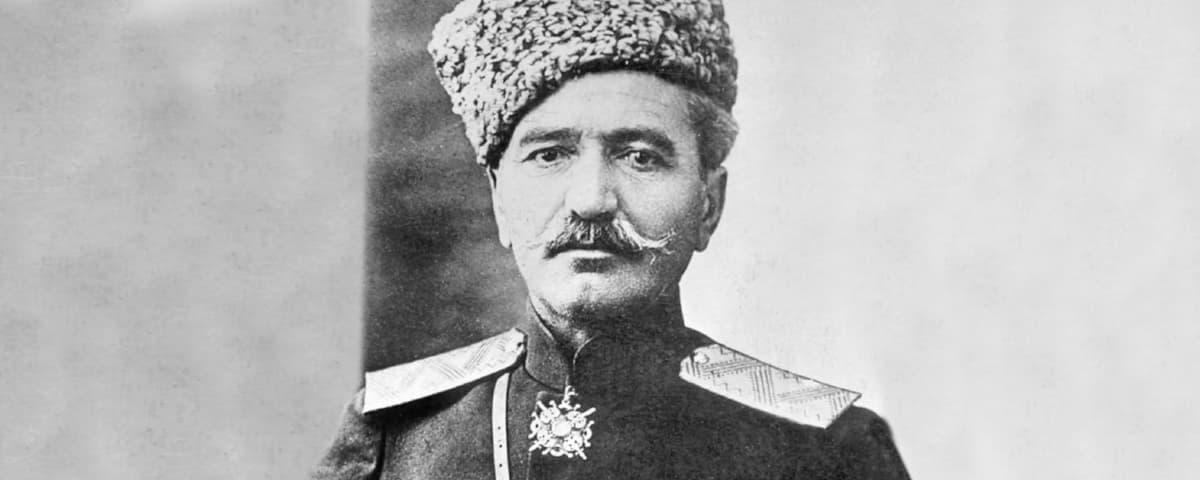
He was not only a military leader but also a bearer of the national spirit – a man whose example helped shape the very idea of liberation for Armenians.
Andranik’s name is tied to the uprisings of Van and Sasun, the battles of Zeytun, the Balkan Wars, and the formation of the First Armenian Republic. His life and deeds became the embodiment of an entire era.
Early Life and the Beginning of the Liberation Movement
Andranik Ozanian was born in 1865 in Shabin-Karahisar. From a young age, he witnessed the harsh reality faced by Armenians in the Ottoman Empire – oppression, forced conscription, and persecution. These experiences instilled in him a determination to fight back.
Soon he joined the Armenian national liberation movement, becoming a leader of fedayi (freedom fighter) detachments. His name quickly became associated with the struggles in Zeytun and Sasun, where he demonstrated not only bravery but also remarkable organizational skills.
The Heroic Battles of Sasun
In the 1890s and early 1900s, Sasun became the heart of Armenian resistance. With his detachment, Andranik took part in numerous battles, defending villagers against Ottoman forces and Kurdish raiders.
One of his most famous actions was the Battle of Sulukh (1907), where only a few dozen fedayi resisted thousands of Ottoman soldiers for several days. This battle cemented Andranik’s reputation as an indomitable hero and a symbol of freedom.
Andranik and the Balkan Wars
Andranik’s fight was not limited to Armenia. In 1912–1913, he joined the Balkan Wars, fighting within the Bulgarian army against the Ottoman Empire.
This expanded his recognition beyond Armenian circles – in the Balkans he was respected as a skillful commander and a symbol of just resistance.
World War I and the Defense of Van
During World War I, Andranik commanded Armenian volunteer units within the Russian army.
In 1915, during the self-defense of Van, his forces played a crucial role in saving the Armenian population from massacre. To the Armenians, he became not only a fighter but a savior.
The First Republic of Armenia and His Bitter Departure
In 1918, Andranik returned to Armenia to take part in the national struggle. He was instrumental in the defense of Zangezur and operations around Nakhichevan.
Yet political realities and the interference of great powers prevented him from realizing his broader plans. Disappointed, Andranik left Armenia, eventually settling abroad. He spent his final years in Paris and later in Fresno, California, where he died in 1927.
The Meaning of His Legacy
The figure of General Andranik transcended the role of a military commander:
- He was an idea of freedom, not merely a fighter.
- He showed that the Armenian people could resist even against superior numbers and weaponry.
- His example inspired later generations, including the volunteers of the Nagorno-Karabakh war, and remains tied to the ideal of the Armenian freedom fighter.
General Andranik was a legend built on real deeds. He left behind not just stories of heroism, but a legacy: the idea of liberation, the strength of unity, and the unbreakable spirit of struggle.
Today, as the Armenian people once again face existential challenges, the memory of Andranik reminds us that freedom is never given – it is earned through sacrifice and determination.
Related articles
 HistoryJanuary 7, 2026
Iran: From a Millennial Empire to the Strict Mandates of the Islamic Republic
5 min read HistoryJanuary 7, 2026
Venezuela: The Tragic Phoenix of Latin America - From Oil Paradise to Geopolitical Nightmare
6 min read LifestyleDecember 9, 2025
Festive Tables Around the World: New Year's Traditions and Their Flavorful Nuances
9 min read HistoryDecember 8, 2025
The Spitak Earthquake: History and Statistics of a Catastrophe (December 7, 1988)
7 min read HistoryNovember 17, 2025
The Horrifying but True Story of a 5-Year-Old Who Became a Mother
4 min read HistoryNovember 7, 2025