
The White House: History, Secrets, and the Heart of American Power
The White House is not just the official residence of U.S. presidents - it is a symbol of power, history, mystery, and influence.
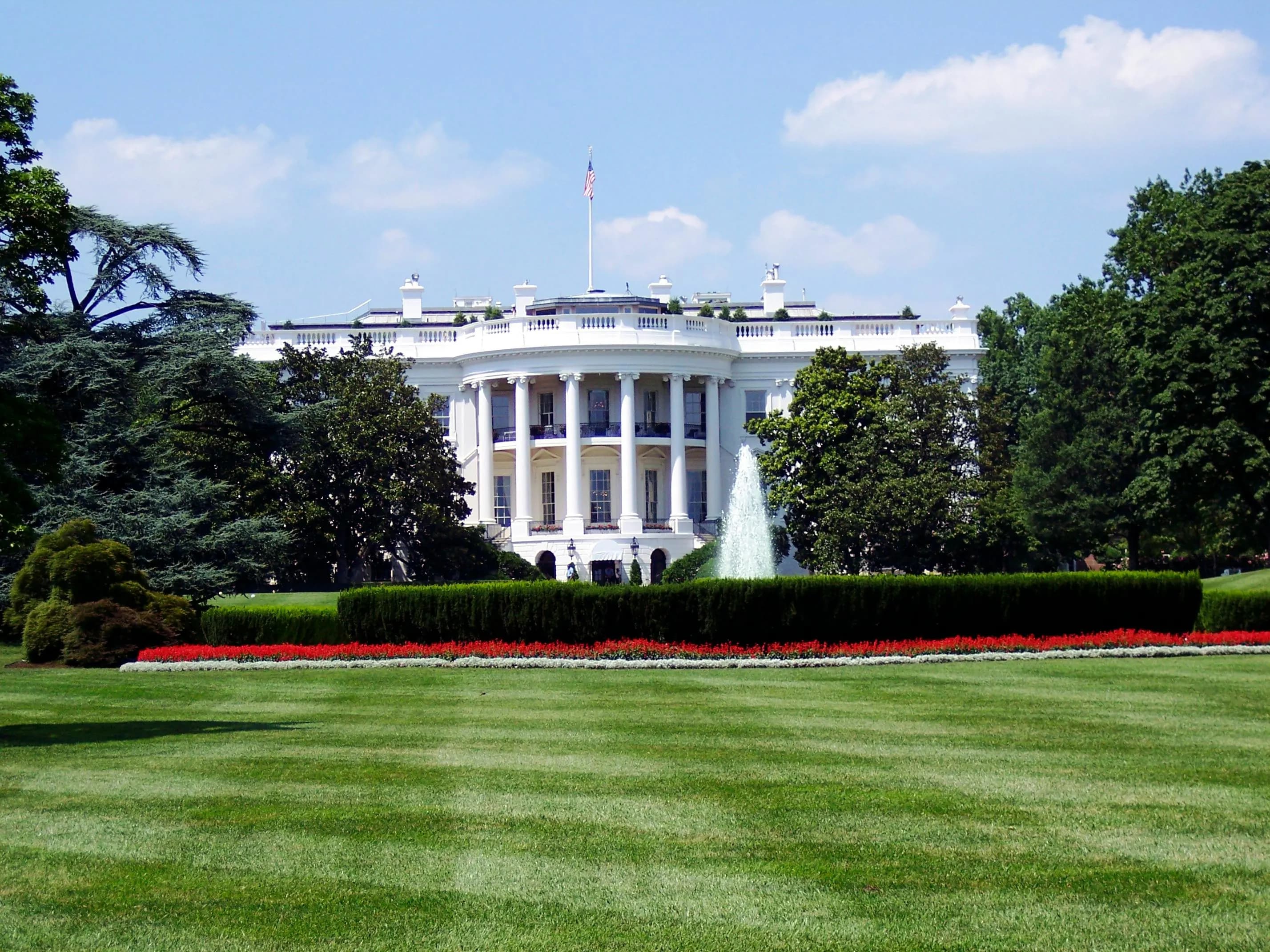
In this article, we’ll explore the history, fascinating facts, and hidden secrets of the most famous house in America.
A Brief History
- 1790 – The U.S. Congress decided to move the capital from Philadelphia to Washington, D.C.
- 1792 – President George Washington personally chose the location for the White House.
- 1793 – Designed by Irish architect James Hoban, the mansion adopted a neoclassical style.
- 1800 – Construction was completed, and John Adams became the first president to live in the White House.
Originally, it was called the President’s Palace or Executive Mansion.
The name “White House” became official only in 1901, under President Theodore Roosevelt.
Wars, Fires, and Reconstructions
The Burning of 1814
During the War of 1812, British troops invaded Washington and set the White House on fire.
- First Lady Dolley Madison famously saved George Washington’s portrait moments before the attack.
- The fire destroyed most of the interior, and when the mansion was rebuilt, the walls were painted white to cover the burn marks — giving the building its iconic appearance.
Truman’s Major Reconstruction (1948–1952)
By the late 1940s, the White House was structurally unsafe.
- President Harry Truman and his family moved temporarily to the Blair House.
- The entire interior was rebuilt with a modern steel framework, while the original exterior walls were preserved for historical continuity.
The Oval Office: Where History Is Made
The Oval Office is the heart of presidential power.
- Its oval shape was chosen so the president would be equidistant from everyone in the room, subtly establishing authority.
- Each president personalizes it - from the rug and paintings to the furniture and drapes.
- Historic decisions made here include:
- Franklin D. Roosevelt’s New Deal programs during the Great Depression
- John F. Kennedy’s handling of the Cuban Missile Crisis
- Barack Obama’s oversight of the Osama bin Laden raid in 2011
Fascinating Facts Few People Know
1. The White House Is Bigger Than It Looks
- 132 rooms
- 35 bathrooms
- 6 floors - two basements and four upper levels
- 147 windows and 412 doors
- 28 fireplaces
- Total area: 55,000 sq. ft.
2. Private Theater and Bowling Alley
- The White House has its own private movie theater, where presidents watch films before they’re released.
- It also features a one-lane bowling alley, gifted to President Harry Truman in 1947.
3. Old Traditions Still Kept Alive
- Thanksgiving Turkey Pardon - each year, the president “pardons” a live turkey.
- Easter Egg Roll - since 1878, children participate in an annual egg-rolling race on the White House lawn.
4. Ghost Stories Inside the White House
The White House is known for its haunted legends:
- Abraham Lincoln’s ghost is said to roam the halls.
- Winston Churchill once refused to stay in Lincoln’s bedroom after “feeling a cold, chilling presence.”
- First Lady Eleanor Roosevelt also claimed she felt “someone watching” her during late-night work.
Top 10 Secrets of the White House
Even though millions of tourists visit the White House, its deepest secrets remain hidden. Here are the most fascinating ones:
1. A Nuclear Fallout Bunker
- Beneath the White House lies a nuclear-proof bunker built during John F. Kennedy’s presidency, at the height of the Cuban Missile Crisis.
- It’s part of a classified network of secure tunnels designed to protect the president during nuclear threats.
2. The Situation Room
- The Situation Room is an underground command center where presidents handle national security crises.
- Equipped with encrypted communication systems, it links directly to the Pentagon and CIA.
- Barack Obama watched the bin Laden raid unfold here in real time in 2011.
3. A Secret Tunnel Network
- The White House connects via hidden tunnels to key government buildings, including:
- The Treasury Department
- Secret Service command centers
- And, according to rumors, possibly the Capitol Building itself.
4. Lincoln’s Ghost
- Staff, presidents, and even foreign leaders have reported encounters with Abraham Lincoln’s ghost.
- The legend remains one of Washington’s most famous haunted stories.
5. Advanced Security Systems
Despite its 18th-century design, the White House is a technological fortress:
- Anti-drone defense systems
- Satellite surveillance
- Laser motion sensors
- Thermal imaging cameras
- Fully encrypted communication networks for nuclear decision-making
6. A Secret Medical Facility
- Built during Ronald Reagan’s presidency, the White House contains a fully equipped medical clinic.
- Capable of performing emergency surgery, it ensures the president is never far from immediate medical attention.
7. The Coded Oval Office Rug
- The Oval Office rug isn’t just decorative - its subtle patterns are deliberately designed to enhance psychological influence during meetings.
8. The Nuclear Football
- The “nuclear football” is a top-secret briefcase containing nuclear launch codes.
- It’s always within a few feet of the president, carried by a specially trained military aide.
9. The PEOC - A Room That’s Always Locked
- The Presidential Emergency Operations Center (PEOC) is an underground secure bunker.
- It became widely known when it was used during the 9/11 attacks to safeguard top government officials.
10. The Roswell Files
- Rumors suggest that the White House stores classified documents from the 1947 Roswell UFO incident.
- While the U.S. government denies it, many believe evidence of extraterrestrial encounters lies hidden within presidential archives.
The White House is far more than just the home of U.S. presidents. It’s a living museum of American history, power, and mystery. From secret tunnels and nuclear bunkers to haunted legends and world-changing decisions, every inch of the building tells a story that has shaped the destiny of nations.
Related articles
 HistoryJanuary 7, 2026
Iran: From a Millennial Empire to the Strict Mandates of the Islamic Republic
5 min read HistoryJanuary 7, 2026
Venezuela: The Tragic Phoenix of Latin America - From Oil Paradise to Geopolitical Nightmare
6 min read LifestyleDecember 9, 2025
Festive Tables Around the World: New Year's Traditions and Their Flavorful Nuances
9 min read HistoryDecember 8, 2025
The Spitak Earthquake: History and Statistics of a Catastrophe (December 7, 1988)
7 min read HistoryNovember 17, 2025
The Horrifying but True Story of a 5-Year-Old Who Became a Mother
4 min read HistoryNovember 7, 2025