
Tigranes the Great’s Alliance Politics: Diplomatic Games Between Rome and Parthia
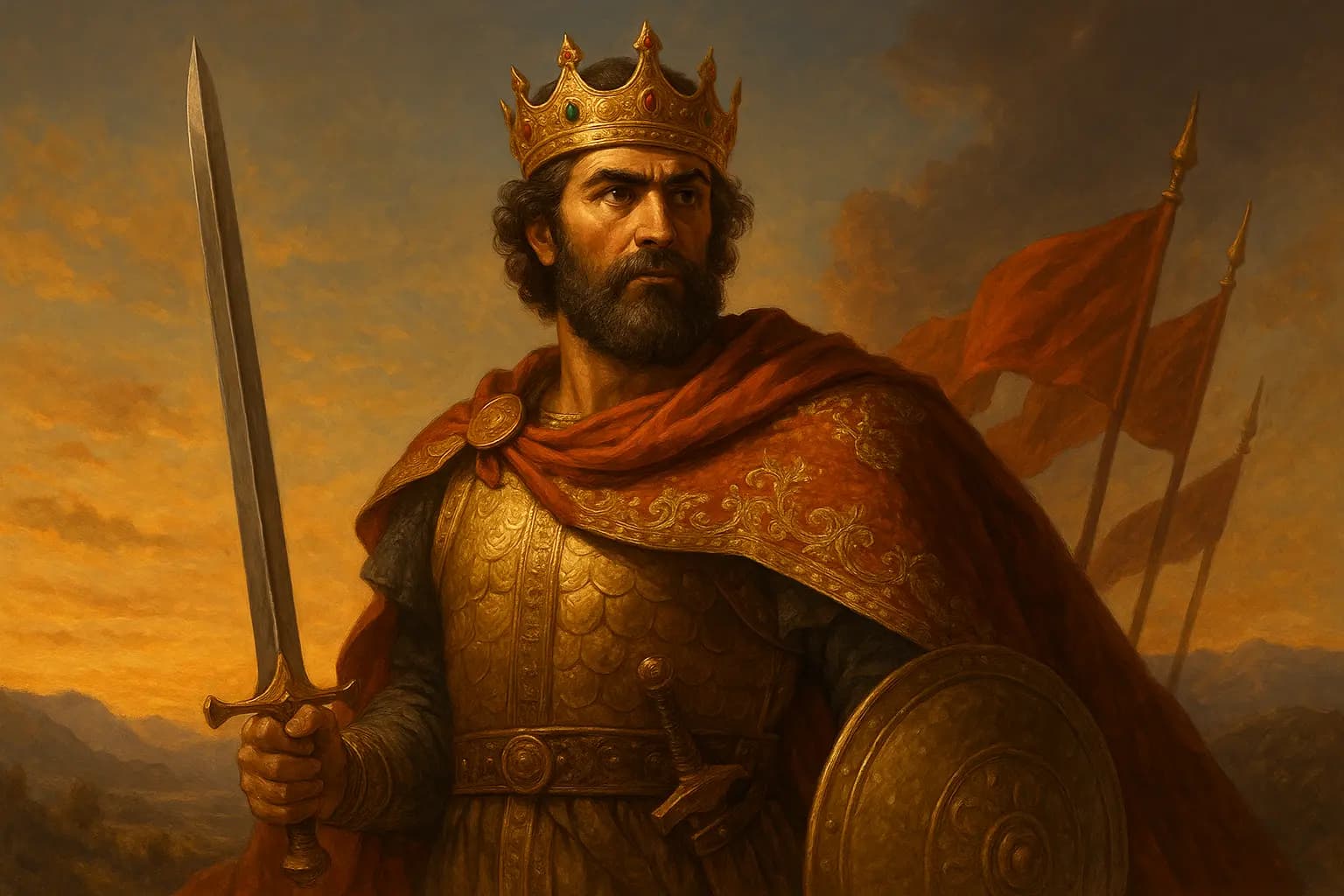
Tigranes the Great was not just a conqueror but also a diplomat. His alliance politics between Rome and Parthia shaped the region’s balance of power and ensured Armenia’s survival even in defeat.
Introduction
Tigranes II “the Great” (95–55 BC) was one of Armenia’s most powerful kings. His empire stretched from the Mediterranean to the Caspian, making Armenia a true regional power. But his success was not just due to his armies. Tigranes mastered the art of diplomacy, navigating between Rome and Parthia while forging alliances with smaller kingdoms.
Historical Context
In the 2nd–1st centuries BC, the Near East was undergoing dramatic shifts. The Seleucid Empire was collapsing, Parthia was rising, and Rome was pushing eastward. Armenia lay at the crossroads, and every move Tigranes made affected the balance of power across the region.
Early Diplomacy
At the beginning of his reign, Armenia was a Parthian vassal. Tigranes himself had been a hostage in Parthia. But once he consolidated power, he broke free and began pursuing an independent foreign policy. His first victories were diplomatic, not military.
Rome and Armenia
Rome was expanding into Asia Minor. Initially, Tigranes avoided open conflict. He allowed Rome to secure its influence while Armenia grew stronger. Eventually, however, Rome and Armenia clashed. Roman generals Lucullus and later Pompey campaigned against Tigranes, reducing his empire’s territory but failing to destroy Armenia altogether.
The Seleucid Marriage
A key moment was Tigranes’ marriage to Cleopatra, a Seleucid princess. This gave him legitimacy in Syria, and in 83 BC he occupied the Seleucid throne. His claim to be the rightful heir of the Seleucid dynasty elevated Armenia’s standing in the Hellenistic world.
Relations with Parthia
Parthia was Rome’s great rival. Tigranes skillfully alternated between hostility and alliance. At one point, Parthia even recognized him as “King of Kings.” This was not only a symbolic victory but also a recognition of Armenia’s new status. Rather than risk a long war, Tigranes often signed temporary truces with Parthian rulers, exploiting their internal dynastic conflicts.
Alliances in Asia Minor
Tigranes built alliances with Cappadocia, Commagene, Atropatene, and Iberia. These kingdoms secured Armenia’s borders and ensured control over vital trade routes, including parts of the Silk Road. Armenia became both a military and economic power.
Alliance with Mithridates VI
Perhaps Tigranes’ boldest diplomatic gamble was his alliance with Mithridates VI of Pontus, Rome’s greatest enemy in the East. Together, they tried to form an anti-Roman bloc. The coalition had early successes, but Rome eventually dismantled it, exposing the limits of Tigranes’ strategy.
Tigranocerta as a Capital of Diplomacy
Tigranes’ new capital, Tigranocerta, was more than a fortress. It was a stage for diplomacy. Ambassadors from Rome, Parthia, and Hellenistic states were received there. The city represented Armenia’s ambition to be seen as an equal among the great powers.
Diplomatic Defeats and Survival
Despite Roman victories, Tigranes did not lose his throne. After negotiating with Pompey, Armenia remained an independent kingdom and became Rome’s ally. This outcome highlighted Tigranes’ pragmatism: he knew when to fight, and when to compromise for survival.
Legacy
Tigranes’ alliance politics showed that Armenia could be a central actor in world affairs. For nearly half a century, Armenia was at the heart of Rome–Parthia rivalry. His legacy demonstrates that diplomacy, as much as war, decides the fate of empires.
Related articles
 HistoryJanuary 7, 2026
Iran: From a Millennial Empire to the Strict Mandates of the Islamic Republic
5 min read HistoryJanuary 7, 2026
Venezuela: The Tragic Phoenix of Latin America - From Oil Paradise to Geopolitical Nightmare
6 min read LifestyleDecember 9, 2025
Festive Tables Around the World: New Year's Traditions and Their Flavorful Nuances
9 min read HistoryDecember 8, 2025
The Spitak Earthquake: History and Statistics of a Catastrophe (December 7, 1988)
7 min read HistoryNovember 17, 2025
The Horrifying but True Story of a 5-Year-Old Who Became a Mother
4 min read HistoryNovember 7, 2025