
Secrets of Vanishing Languages: The World's Rarest Languages and Why They Matter
Every 14 days, a language disappears somewhere in the world. This isn't just a loss of words; it's the irreversible erasure of an entire culture, worldview, and unique body of knowledge. People often think of rare languages as just a means of communication, but they are much more: they are exclusive repositories of human knowledge. Linguists and anthropologists are fighting against time, trying to save these treasures before it's too late.

Language as a Reflection of Culture and History
Each language preserves its people's history through oral traditions, myths, songs, and stories. For example, the Kusung language in Papua New Guinea, spoken by only a few hundred people, has a complex vocabulary about nature and animals that is unknown to modern science. The death of this language would mean the loss of not only words but also centuries of knowledge and heritage.
Languages often reflect a culture's values and philosophy. For instance, the Seneca language, spoken by Native Americans in North America, has no words that mean "I have," because in their culture, the sense of ownership is traditionally weak. Instead, they use a structure that translates to "it is with me."
The Impact of Language on Our Brains
Linguists have found that people who speak different languages can perceive the world in different ways. For example, the Guugu Yimithirr language of Australian Aboriginals has no concepts of "left" and "right." Instead, they use directional words like "north," "south," and so on. Speakers of this language always know their exact position in space, which is astonishing to modern people. This shows how language can shape our cognitive abilities.
Language as a Guardian of Biological and Botanical Secrets
The loss of rare languages also means the loss of unique biological and botanical knowledge. Tribes living in the Amazon rainforest or the cold Siberian tundras have created their languages based on a detailed study of their surroundings. For example, some indigenous languages have dozens of different words to describe various parts or stages of the same plant species, each of which may have healing or other properties. This knowledge can be invaluable to pharmaceutical companies, but it often exists only orally and dies with the language.
The Possibilities of Language Revival
Despite the grim predictions, there are also successful examples of language revival. Modern Hebrew was a dead language for thousands of years, but it was revived in the 20th century and is now a state language. Similar efforts are being made for Cornish and Manx, which had nearly disappeared in the United Kingdom. These examples show that the death of a language is not inevitable if there are active efforts to preserve and pass it on to future generations.
From the List of Rarest Languages
- Ainu: Spoken in northern Japan, this language is practically dead, with only one remaining speaker. It is unrelated to Japanese and carries its unique culture and beliefs.
- Kaixan: Spoken in Botswana, this language has unique click sounds that are nearly impossible to pronounce in other languages. It is closely linked to the region's environmental knowledge.
- Chulym: This Turkic language, spoken in Siberia, has only a few speakers. The loss of this language would mean the loss of a unique culture, folklore, and knowledge of living in harmony with nature.
How Languages Are Being Saved
To combat this crisis, scientists and activists are taking the following steps:
- Digitization and Documentation: They interview the last speakers, record their speech, and create digital archives.
- Educational Programs: They work with indigenous communities to teach the language in schools and communities, passing it on to the next generation.
- Technological Solutions: They create dictionaries, apps, and online platforms that make the language accessible to a wider audience.
The preservation of these languages is important not only for their speakers but for all of humanity. They are part of our common cultural heritage, preserving the diversity and beauty of the world. Each language is a unique universe, and its death is an irreversible loss for all of us.
Related articles

 HistoryJanuary 7, 2026
Iran: From a Millennial Empire to the Strict Mandates of the Islamic Republic
5 min read HistoryJanuary 7, 2026
Venezuela: The Tragic Phoenix of Latin America - From Oil Paradise to Geopolitical Nightmare
6 min read LifestyleDecember 9, 2025
Festive Tables Around the World: New Year's Traditions and Their Flavorful Nuances
9 min read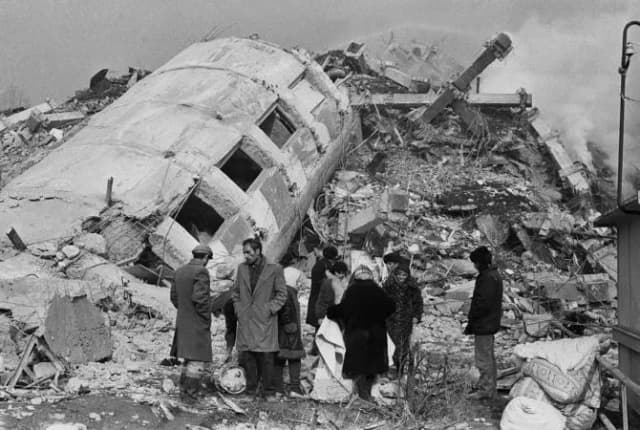 HistoryDecember 8, 2025
The Spitak Earthquake: History and Statistics of a Catastrophe (December 7, 1988)
7 min read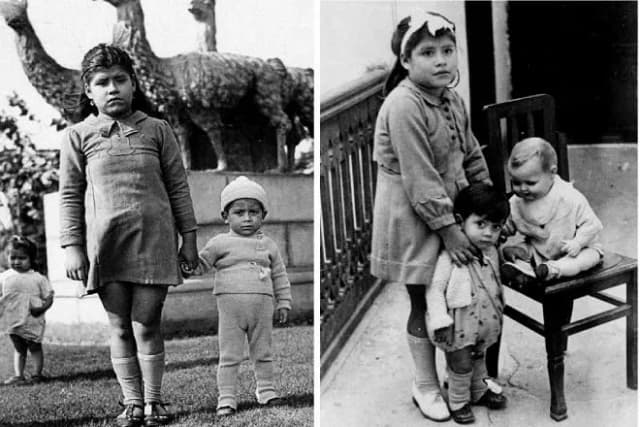 HistoryNovember 17, 2025
The Horrifying but True Story of a 5-Year-Old Who Became a Mother
4 min read HistoryNovember 7, 2025