
The Lost City: The Rebirth of Pompeii
In history, there are moments when time seems to stand still, and an entire segment of civilization is left in eternal silence. The story of Pompeii, one of the most prosperous cities of the Roman Empire, is just that.
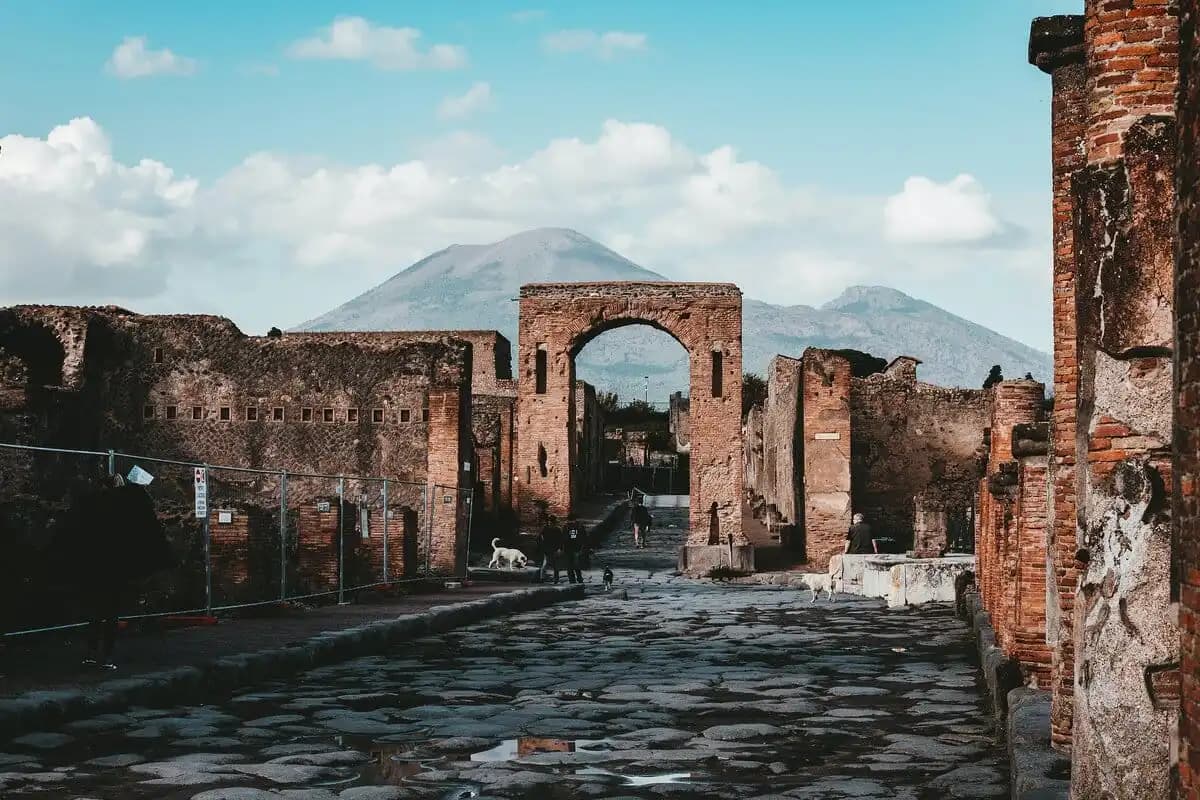
On August 24, 79 AD, the colossal eruption of Mount Vesuvius destroyed the city in a single day, burying it under volcanic ash. However, this tragedy did not make Pompeii immortal; it turned it into a unique "time capsule" of a historical period.
Life Before the Tragedy: The Splendor of a Roman City
Before the tragedy, Pompeii was not a large, but a beautiful and very wealthy city located on the Bay of Naples. It was a place where rich Romans built their luxurious villas. Pompeii was known for its prosperous economy, growing grapes and olives.
Life in the city was vibrant. Citizens often gathered in the central square, the Forum, to discuss political matters, trade, or simply socialize. Pompeii had an amphitheater where gladiatorial games were held, and theaters where dramatic performances were staged. The public baths, the thermae, were not only centers of hygiene but also important hubs for social interaction. The city's streets were filled with shops, bakeries, and taverns.
The houses in the city were proof that Pompeii could live a full life. The walls of the houses were decorated with beautiful frescoes depicting gods, heroes, and scenes from daily life. The walls also had advertisements, inscriptions, and even children's drawings. All this shows that people had a vibrant and diverse life.
The Day of the Disaster: The Eruption of Mount Vesuvius
On August 24, 79 AD, Mount Vesuvius, which had been "asleep" for centuries, suddenly and unexpectedly erupted. At first, a giant mushroom-shaped cloud rose into the sky, filling the air with ash and stones. In the first hours, people panicked, but some still tried to escape.
However, the continuous fall of volcanic ash and pumice forced everyone to hide in their homes and shelters. The houses were buried one after another. A few hours later, the second, more deadly phase of the eruption began: hot gases began to flow from the volcano, rushing towards the city. The ash buried the city, while the gases caused instant death.
The memory of the disaster is preserved in the famous plaster casts of the people of Pompeii. This shows how people died and what emotions they had.
Rebirth and Discovery
Pompeii remained buried for more than 1600 years. It was discovered only in the 18th century when workers accidentally uncovered Roman structures. Since then, excavations began, revealing not just ruins, but an entire city.
Using special techniques, archaeologists were able to create plaster casts of human bodies. When the ash had hardened, the people's bodies had decomposed, leaving an empty space. Archaeologists filled these spaces with plaster, which allowed them to preserve the location of the people's deaths.
Today, Pompeii is one of the most important historical and archaeological sites. It is a museum that allows us to walk through Roman streets, visit ancient houses, and imagine what life was like for people 2000 years ago.
The Lessons of Pompeii
Pompeii teaches us many things. First, it shows how fragile human life is against the forces of nature. Second, it proves how a tragedy can preserve history. The death of the people allowed their lives, homes, and belongings to remain unchanged.
Pompeii is a monument that reminds us to appreciate the present. It is not just the story of a lost city, but a story of life, love, and death.
Related articles

 HistoryJanuary 7, 2026
Venezuela: The Tragic Phoenix of Latin America - From Oil Paradise to Geopolitical Nightmare
6 min read LifestyleDecember 9, 2025
Festive Tables Around the World: New Year's Traditions and Their Flavorful Nuances
9 min read LifestyleNovember 10, 2025
When Steel Starts to Think: China’s Robots Step Out of the Lab
10 min read HistoryOctober 27, 2025
How the €88 Million Heist Shook the Louvre and Awakened the Ghost of the Mona Lisa
12 min read HistoryOctober 18, 2025
The Gaza Conflict: How It Started, Why It Persists, and Where It Might Go
9 min read LifestyleOctober 10, 2025