
How the €88 Million Heist Shook the Louvre and Awakened the Ghost of the Mona Lisa
An analysis of the audacious October 2025 crime, the myths of Louvre's security, and the shadow art market where history becomes currency.
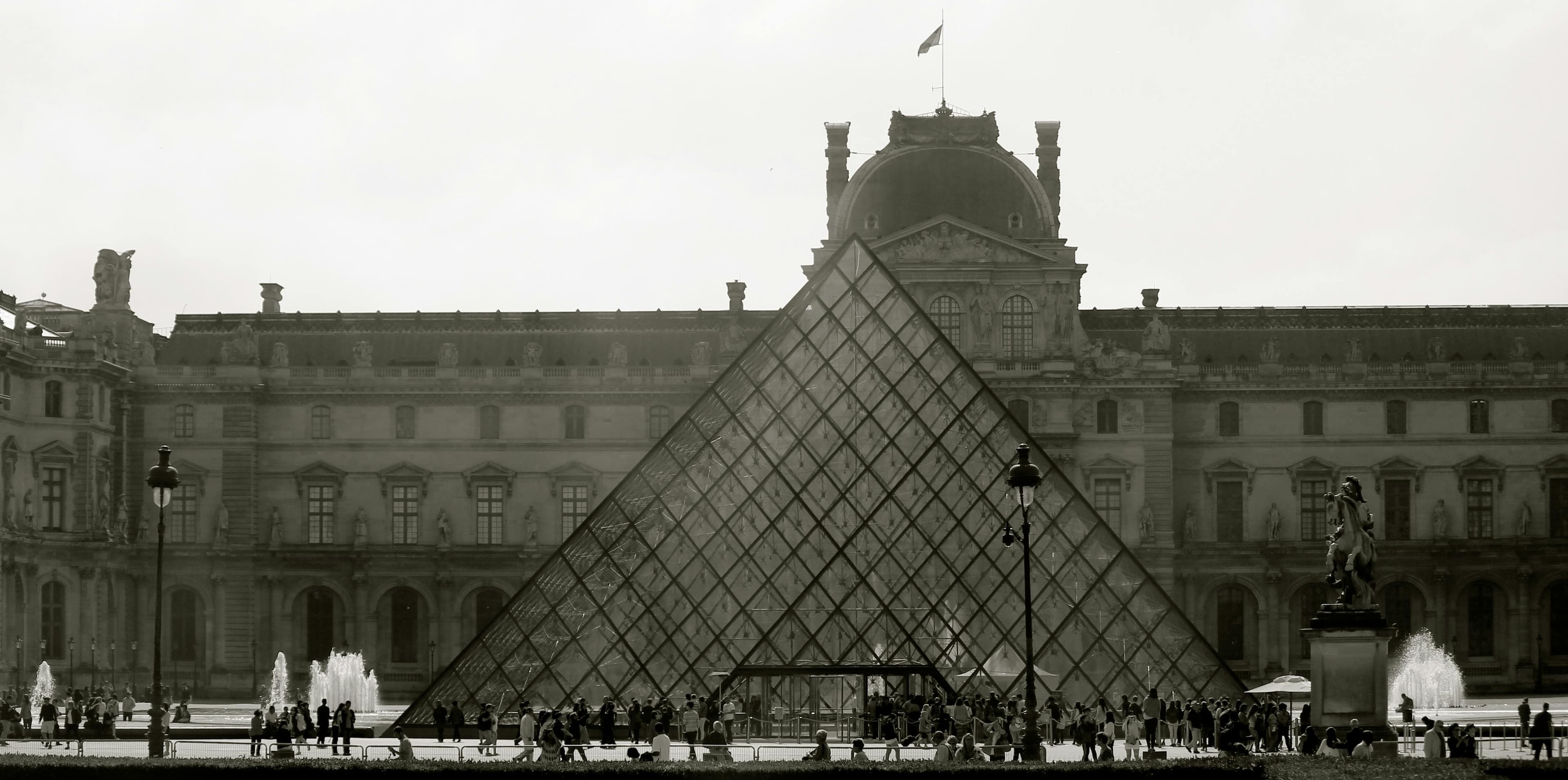
Introduction: The Silence After the Storm
The morning of October 27, 2025, in Paris did not begin with the usual tourist buzz, but with a dull, tense silence. The world's largest and most visited museum, the Louvre, was partially cordoned off with police tape. The doors to the Apollo Gallery (Galerie d'Apollon)—home to the dazzling collection of the French Crown Jewels—were sealed. A question hung in the air, one that would soon become global headlines: The Louvre had been robbed.
The first reports were evasive, but details soon began to leak, painting a picture of an incredible, almost cinematographic crime. This was not a common robbery, but an operation executed with surgical precision. The target: the royal jewels of France. The estimated loss: a staggering €88 million.
As the world tried to comprehend what had happened and investigators began to unravel the tangled skein, another, older ghost seemed to awaken in the cold corridors of the Louvre. 114 years ago, in 1911, the world's most famous painting, the "Mona Lisa," had vanished from these very walls.
This 2025 theft is not just a financial loss. It is a blow to French national pride, a challenge to modern security systems, and a harsh reminder that cultural heritage is always vulnerable. This article is not only about what was stolen, but how it was possible, why art theft is so alluring, and what awaits the stolen treasures in the shadow world where beauty is valued in carats and kilograms.
Part I: The Heist of the Century: What Happened in the Apollo Gallery
The operation, according to investigators, was a display of extraordinary professionalism. This was not a "smash-and-grab" attack. This was the work of a team of criminals who, in all likelihood, had inside help, detailed blueprints, and months, if not years, of preparation.
The Target: The Heritage of Kings
The Galerie d'Apollon is one of the most magnificent halls in the Louvre. It is a work of art in itself - a gilded, frescoed corridor that served as the original prototype for the Hall of Mirrors at Versailles. And it is here that the few treasures of the French Crown that survived revolutions and wars are displayed.
The robbers did not touch the paintings. Their goal was specific: historical jewels from the 18th and 19th centuries, including items associated with Napoleon and Empress Joséphine, as well as unique diamonds, such as the famous 140-carat "Le Régent" diamond (though reports of its theft are not officially confirmed, the panic has already begun). The preliminary estimate of €88 million is likely just the insurance value. The historical value of the items is incalculable.
The Method: Breaching the Unbreachable
The Louvre is not just a museum; it is a fortress. Its security system is multi-layered:
- The Outer Perimeter: Thousands of cameras, armed patrols (including soldiers from the "Opération Sentinelle" anti-terrorism unit), gates, and physical barriers.
- The Internal System: Motion detectors, laser grids that activate after closing, and constant patrols by night guards.
- Direct Protection: The most valuable exhibits are housed in special, armored-glass vitrines, equipped with pressure, vibration, and temperature sensors.
The robbers managed to bypass all of these layers. They did not enter through the main entrance. Investigators speculate they used either the old, medieval communication tunnels running beneath the museum or (more likely) entered from the roof, possibly using scaffolding erected for renovation work.
They worked in silence. The alarm systems did not trigger, which speaks either to sophisticated technological interference (jammers, signal blockers) or, more terrifyingly, to internal access to the system's codes. The armored glass was not broken, but expertly opened, possibly with the precision of a locksmith or a jeweler.
The case is being handled by the elite unit of the French criminal police, the BRB (Brigade de Répression du Banditisme – Brigade for the Repression of Banditry), which specializes in organized crime and art theft.

Part II: The Myth of Inviolability: The Lesson of 1911
It is impossible to understand the event of 2025 without remembering the greatest trauma in the Louvre's history. On August 21, 1911, the "Mona Lisa" was stolen from the Louvre.
Vincenzo Peruggia: The Man Who Hid the Gioconda Under His Coat
In contrast to the high-tech theft of 2025, the robbery of the "Mona Lisa" was astonishingly primitive. The thief, Vincenzo Peruggia, was an Italian immigrant who had previously worked at the Louvre as a handyman, helping to install the protective glass for the paintings.
He knew the system. He knew that on Mondays, the museum was closed for cleaning and repairs. He had simply hidden in a closet overnight. In the morning, wearing a white worker's smock like the other staff, he walked into the Salon Carré, took the painting off the wall, went to a staircase, removed the heavy frame and glass, wrapped the painting, and hid it under his coat.
Incredibly, the museum only noticed the painting was missing 26 hours later.
The Aftermath: The Birth of a Myth
The scandal was immense. France was humiliated. The director of the Louvre resigned. The police even questioned Pablo Picasso (who had previously bought smaller items stolen from the Louvre). Newspapers offered huge rewards.
The "Mona Lisa" was missing for two years. Peruggia kept it in his Paris apartment, under a false bottom in a trunk. His motive, he claimed, was patriotic: he believed Napoleon had stolen the painting from Italy (which was false; Leonardo himself had brought it to France) and he wanted to return it to his homeland.
He was caught in 1913 when he tried to sell the painting to the director of the Uffizi Gallery in Florence.
This theft made the "Mona Lisa" what she is today. Before, she was a famous painting; after the theft, she became a global icon.
The lesson of 1911 was this: the weakest link in the fortress is the human element and blind faith in the system. The 2025 theft shows that even after 114 years of technological leaps, the human factor - be it betrayal from within or audacious genius from without - remains decisive.
Part III: The Shadow Market: What Awaits the €88 Million Treasure?
Historical jewels worth €88 million cannot be sold on eBay or even at a Christie's auction. Stolen items of this magnitude enter the dark realm of the high-level criminal underworld, where three main scenarios exist.
Scenario 1: "The Tragedy" (The Most Likely)
This is the fastest, safest, and most tragic path for the thieves. In the case of jewels, they are not interested in historical value. They are interested in the material. The jewels will be dismantled. The diamonds, emeralds, and rubies will be removed from their settings. The gold and platinum will be melted down into anonymous ingots.
The stones represent the greatest value. To make them disappear into the global market, they will likely be re-cut. This changes their weight, shape, and the small "signatures" by which experts can identify them. In this process, part of the stone's value is lost, but it becomes "clean." They will then be sold piecemeal in the shadow sectors of the diamond markets in Antwerp, Tel Aviv, or India, mixed in with legitimate batches.
In this scenario, the French Crown Jewels will physically cease to exist.
Scenario 2: "The Ransom" (The Long Game)
If the thieves are smarter and have connections, they might play the "long game." They will hide the treasures in a safe place and wait. They will wait for years, perhaps a decade, until the public furor dies down.
Then, through intermediaries (usually shadowy lawyers), they might anonymously contact not the French government (which will not negotiate with terrorists or thieves), but the insurance company that was forced to pay the €88 million claim. They will offer to return the jewels for 5-10% of their value. For the insurance company, this is a good deal: they recover a part of their loss, and the world gets its heritage back.
Scenario 3: "Dr. No" (Myth and Reality)
This is the James Bond movie scenario: a mysterious, eccentric billionaire who commissions the theft to admire the jewels in his private, underground museum.
In real life, this is extremely rare. Why? Because a collector's primary pleasure is to show off, to boast. What is the point of owning something you can never show to anyone, and which, if discovered, would send you straight to prison? However, a "criminal currency" market does exist. The stolen treasures could be used as collateral in major drug or arms deals. They are easier to transport than €88 million in cash.
Part IV: The Shadow of Irony: Who Owns the Louvre?
This 2025 theft also has a complex cultural and moral subtext. As soon as the news spread, an unpleasant but predictable debate began on social media and in some academic circles.
The irony is that the Louvre itself is accused of holding vast riches acquired from other cultures throughout history. Napoleon's campaigns in Egypt and Italy were not just military operations but also acts of cultural plunder. The Louvre's Egyptian collection is one of the world's largest, and the legality of many of its exhibits' acquisition is debatable. The Dendera Zodiac, the Code of Hammurabi (found in modern-day Iraq)—these are treasures brought to France from a position of colonial or military dominance.
In recent years, the movement for "repatriation" of cultural artifacts has grown. Egypt demands its treasures; Greece demands the Elgin Marbles (from the British Museum).
In this context, some cynical commentators have remarked that "the Louvre got a taste of its own medicine." This is, of course, a dangerous and flawed logic. One crime does not justify another. And unlike the Egyptian artifacts, the French Crown Jewels are indisputably part of French history and heritage.
Nevertheless, this theft forces the Louvre and other "universal museums" to confront an uncomfortable truth: when you position yourself as the guardian of world culture, you also become a target of global resentment and, as it turns out, the criminal world.
Conclusion: The Hunt and the Lessons
At this moment, Interpol and the Art Loss Register (ALR) have issued global alerts with descriptions of the stolen items. Every major auction house, jeweler, and customs office is now on high alert. A global game of cat-and-mouse has begun.
But regardless of whether the treasures are returned or not, the myth of the Louvre's inviolability has already been shattered. Just as the 1911 theft led to radical security reforms, this 2025 heist will trigger a new technological arms race. We can expect smarter systems: artificial intelligence that predicts suspicious behavior, more complex biometric checks for staff, and perhaps even internal drone patrols.
But the Louvre's tragedy, in the final analysis, is not the loss of €88 million. It is the realization that culture, no matter how well protected, is ultimately held by a thin thread of trust. And when that thread is cut—whether by internal betrayal or external, audacious genius—not even the thickest walls or the smartest alarms can stop history from evaporating. France lost not just diamonds, but a piece of its past that may never return.
Related articles

 HistoryJanuary 7, 2026
Iran: From a Millennial Empire to the Strict Mandates of the Islamic Republic
5 min read HistoryJanuary 7, 2026
Venezuela: The Tragic Phoenix of Latin America - From Oil Paradise to Geopolitical Nightmare
6 min read LifestyleDecember 9, 2025
Festive Tables Around the World: New Year's Traditions and Their Flavorful Nuances
9 min read HistoryDecember 8, 2025
The Spitak Earthquake: History and Statistics of a Catastrophe (December 7, 1988)
7 min read HistoryNovember 17, 2025
The Horrifying but True Story of a 5-Year-Old Who Became a Mother
4 min read HistoryNovember 7, 2025