
The Heroic Story of Musa Dagh Armenians: Exodus, Resistance, and Legacy
The heroic resistance of Musa Dagh Armenians in 1915 - a story of exodus, survival, and legacy, where unity and courage turned tragedy into survival.
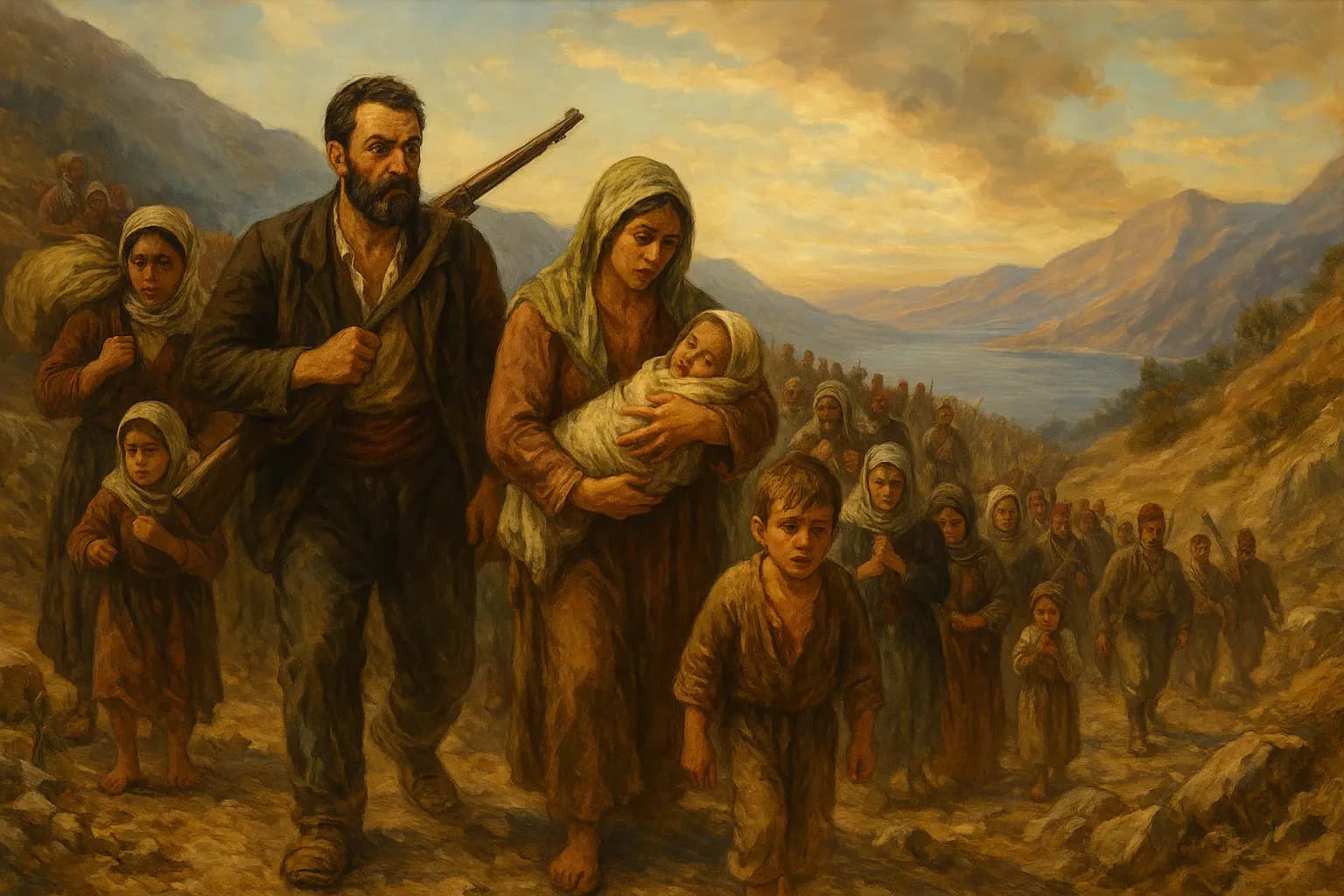
In 1915, during the Armenian Genocide, the Ottoman Empire launched systematic deportations and massacres of Armenians across Anatolia and Cilicia. Entire communities were forced to march into the Syrian deserts, where famine, disease, and massacres awaited them. Yet in the midst of this darkness, the Armenians of seven villages near the Mediterranean coast made a different choice: instead of surrendering to certain death, they climbed the slopes of Musa Dagh (Mount Moses) and prepared to resist.
These seven villages - Vakif, Haji Habibli, Khdrbek, Yoghunoluk, Kabusia, Sabjeci, and Bitias - had a combined population of nearly 4,000 people. In late July, after receiving the deportation orders, the villagers gathered their families, carried whatever food and livestock they could, and began the arduous ascent into the mountains. Old men, women, and children joined the march. The climb itself was exhausting, but it symbolized their determination to survive rather than vanish silently in the deserts.
Once entrenched on Musa Dagh, the Armenians organized themselves into defensive groups. Men formed armed units, while women prepared food, tended to the wounded, and sustained morale. Even children and the elderly contributed by gathering firewood, carrying water, or caring for the sick. Soon, Ottoman forces surrounded the mountain, confident they could starve or crush this small community. Instead, they encountered 53 days of fierce resistance. Despite limited ammunition and dwindling supplies, the defenders fought off wave after wave of attacks. What sustained them was not only the will to live but also an unshakable sense of unity.
By early September, however, their situation had grown desperate. Hunger gnawed at the camp, and the defenders feared they would soon be overrun. In a final gamble, they prepared massive white banners with the words: “Christians in Danger. Help.” These signals were displayed on the mountainside, visible to ships passing through the Mediterranean. Their prayers were answered when French naval forces spotted the banners. Responding swiftly, French ships approached the shore and evacuated nearly 4,000 Armenians, transporting them safely to Port Said in Egypt.
For the survivors, this was both miraculous salvation and the start of a new exile. After World War I, some Musa Dagh Armenians returned to their villages. But in 1939, when the province of Hatay was annexed by Turkey, they were forced once again to abandon their homeland. This time, many resettled in Anjar, Lebanon, where they built a thriving Armenian community that still preserves the traditions, dialect, and memory of Musa Dagh. Others emigrated to Europe and the United States, carrying the legacy of survival with them.
The story of Musa Dagh did not remain confined to Armenian memory. It reached global audiences through Franz Werfel’s famous novel “The Forty Days of Musa Dagh”, which immortalized the defiance of this small community against overwhelming odds. The novel became a bestseller and introduced countless readers to the Armenian Genocide, shaping international awareness of both the tragedy and the courage of the Armenians.
Today, more than a century later, the story of Musa Dagh continues to resonate. It is not merely a tale of survival, but of dignity, courage, and unity in the face of extermination. The mountain stands as a lasting symbol — a reminder that even in humanity’s darkest hours, resistance is possible, and freedom is worth fighting for.
Related articles
 HistoryJanuary 7, 2026
Iran: From a Millennial Empire to the Strict Mandates of the Islamic Republic
5 min read HistoryJanuary 7, 2026
Venezuela: The Tragic Phoenix of Latin America - From Oil Paradise to Geopolitical Nightmare
6 min read LifestyleDecember 9, 2025
Festive Tables Around the World: New Year's Traditions and Their Flavorful Nuances
9 min read HistoryDecember 8, 2025
The Spitak Earthquake: History and Statistics of a Catastrophe (December 7, 1988)
7 min read HistoryNovember 17, 2025
The Horrifying but True Story of a 5-Year-Old Who Became a Mother
4 min read HistoryNovember 7, 2025