
The Most Fascinating Scientific Facts You Won’t Learn in School
Science is full of mysteries and surprising discoveries that shape our understanding of the world. School textbooks usually teach the basics, but there’s a universe of extraordinary facts, fascinating phenomena, and unusual discoveries that don’t make it into the curriculum.
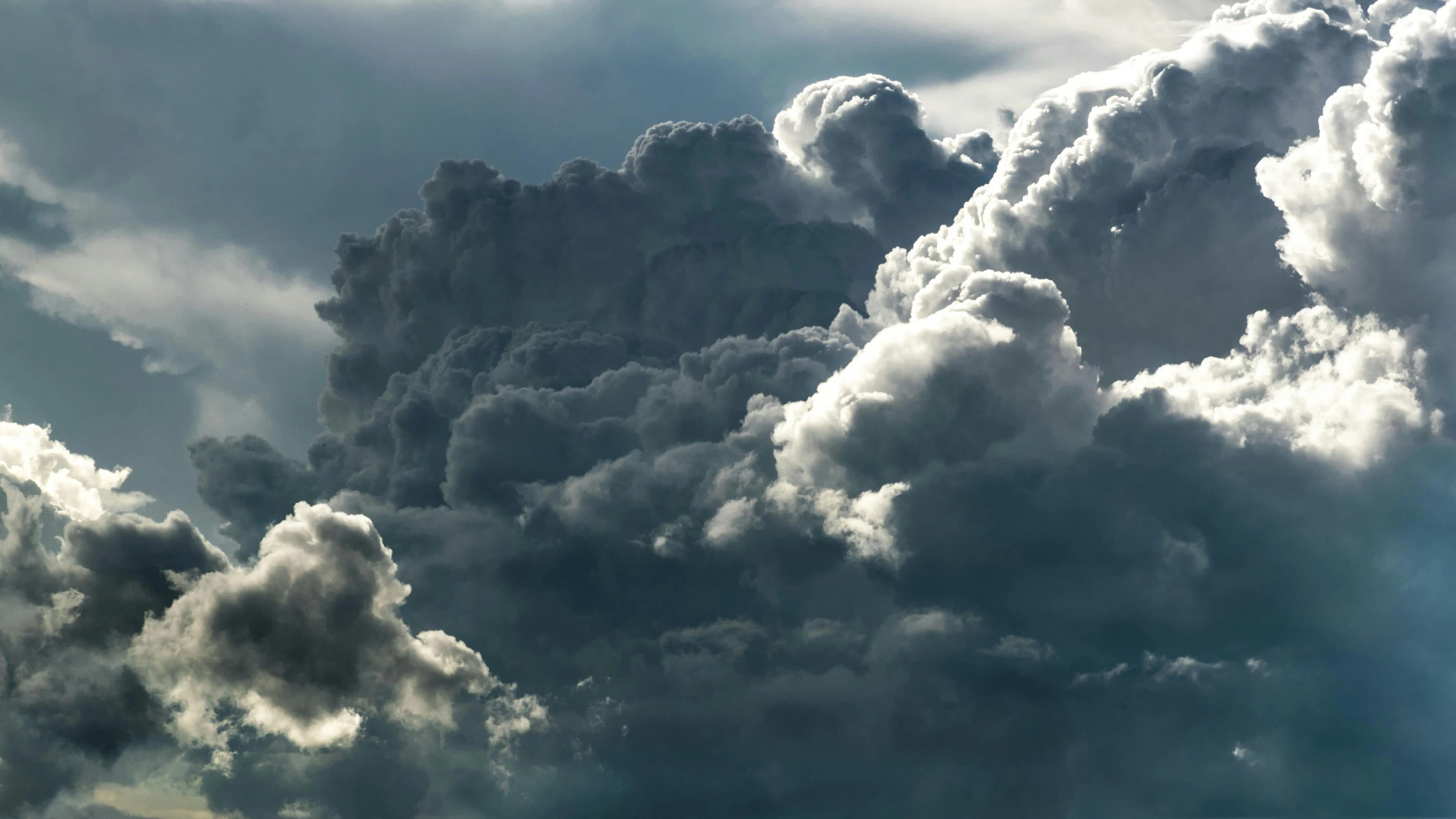
This article explores some of the most mind-blowing scientific facts you probably won’t find in your school books - explained simply and clearly so everyone can enjoy them.
1. Why the Sky Looks Blue
Have you ever wondered why the sky is blue during the day but can turn orange, pink, or red at sunset? It’s all thanks to a phenomenon called Rayleigh scattering.
- Sunlight looks white but is actually made up of different colors.
- When sunlight enters the Earth’s atmosphere, gas molecules scatter the shorter blue wavelengths more than the longer red ones.
- As a result, we see the sky as blue most of the day.
At sunset, sunlight travels through more of the atmosphere. Most of the blue light scatters away, leaving reds and oranges behind - painting the sky in warm, glowing shades.
2. Why Ocean Water Is Salty
The salty taste of seawater has a fascinating geological origin. Over millions of years, rivers have eroded rocks, carrying dissolved minerals into the oceans. The most common of these minerals is sodium chloride - common table salt.
- If you collected all the salt from the oceans, it would cover the entire Earth with a layer about 150 meters thick.
- Some lakes, like the Dead Sea, are even saltier than the oceans. The salt concentration there is so high that you can float effortlessly without sinking.
3. The Moon Sometimes Looks Huge or Turns Red
You may have noticed that sometimes the moon looks unusually large and bright, while other times it turns an eerie red. Here’s why:
- The “giant” moon - When the moon is near the horizon, your brain compares it to nearby trees, buildings, and mountains, making it look bigger. It’s actually an optical illusion; its size never changes.
- Red or “blood” moons - During lunar eclipses or when there’s a lot of dust or smoke in the atmosphere, shorter wavelengths like blue and green scatter away, leaving the longer red wavelengths. This gives the moon a deep red glow.
4. Snow Isn’t Always White
You might think snow is always white, but it can actually appear in surprising colors:
- Pink or red snow - Found in high-altitude regions, caused by algae living in the snow.
- Black snow - Appears near volcanoes when ash mixes with ice crystals.
- Blue snow - Sometimes seen in glaciers due to compressed ice crystals reflecting light differently.
So next time you see fresh snow, remember - its “whiteness” hides a surprising scientific variety.
5. Birds Have a Built-In Compass
Migratory birds travel thousands of kilometers every year, crossing oceans and continents with astonishing accuracy. Scientists have discovered that many birds have an internal compass that helps them navigate:
- Certain proteins in their eyes allow them to “see” Earth’s magnetic field.
- They also rely on the Sun, stars, and landmarks for orientation.
- Some species can travel from the Arctic to South America and back every year without getting lost.
This natural GPS system is still being studied, but it shows how extraordinary animal instincts can be.
6. The Deepest Point on Earth Is Deeper Than Mount Everest Is Tall
The deepest part of the world’s oceans is the Mariana Trench, located in the Pacific Ocean. Its deepest point, called the Challenger Deep, plunges nearly 11 kilometers beneath the surface.
- If Mount Everest were placed inside the Mariana Trench, its peak would still be about 2 kilometers underwater.
- The water pressure at that depth is more than 1,000 times greater than at sea level.
- Despite these extreme conditions, life thrives there — from bizarre jellyfish to microorganisms adapted to crushing pressure.
7. The Human Body Glows in the Dark
It might sound like science fiction, but the human body actually emits a tiny amount of light. Scientists have discovered that our cells produce photons - particles of light - during normal metabolic processes.
- The glow is about 1,000 times weaker than what the human eye can detect.
- Our faces emit slightly more light than other body parts.
- This natural glow peaks in the late afternoon and drops at night.
So yes - we’re all “shining,” even if we can’t see it.
8. Insects Quietly Rule the World
Humans may dominate the headlines, but in terms of sheer numbers and influence, insects rule the planet:
- There are around 10 quintillion insects on Earth — that’s about 1.4 billion insects per person.
- Ants alone weigh as much as all humans combined.
- Without insects, most ecosystems would collapse. They pollinate plants, recycle nutrients, and form the base of countless food chains.
Next time you see a tiny ant, remember it’s part of an army that sustains life on Earth.
9. Plants Can “Hear” and React to Sound
It turns out plants are much more responsive than we thought. Research shows that some plants can detect sound vibrations and change their behavior accordingly:
- Plants grow faster when exposed to gentle music.
- Flowers open more quickly when they sense the buzzing of bees nearby.
- Some plants release chemical defenses when they “hear” the chewing sounds of insects.
This suggests that plants are deeply attuned to their environments in ways we’re only beginning to understand.
10. In Space, Metals Can Stick Together Without Heat
On Earth, welding metals requires heat, pressure, and special tools. But in the vacuum of space, two clean metal surfaces touching each other can fuse instantly. This is called cold welding.
- Without air or moisture between the metals, their atoms see no “boundary” and bond together.
- Engineers designing spacecraft must consider this effect when building satellites and space stations.
It’s a reminder that physics can behave very differently once you leave Earth.
11. Your Stomach Gets a “New” Lining Every Few Days
Here’s something your schoolbooks probably didn’t mention: the lining of your stomach is constantly regenerating.
- The acid in your stomach is strong enough to dissolve metal.
- To prevent self-digestion, the stomach produces a new protective lining every 3 to 4 days.
- Without this regeneration, the stomach would literally digest itself.
This is just one example of the body’s incredible adaptability.
12. There’s “Raining Diamonds” on Other Planets
Scientists believe that on planets like Saturn and Jupiter, extreme pressure deep within the atmosphere turns carbon into diamonds - creating literal “diamond rain.”
- These diamond chunks could be several centimeters across.
- Similar phenomena might happen on Neptune and Uranus.
- While we can’t mine these diamonds yet, the discovery gives us clues about the exotic chemistry of other worlds.
Science is far more fascinating than we often realize. Beyond the formulas and diagrams in school textbooks lies a world full of surprises:
- Humans glow faintly in the dark.
- Birds can “see” magnetic fields.
- Oceans hide places deeper than mountains are tall.
- Plants may actually “listen” to the world around them.
By staying curious and exploring beyond the classroom, we can uncover wonders that make our planet - and universe - even more extraordinary.
Related articles

 HistoryJanuary 7, 2026
Venezuela: The Tragic Phoenix of Latin America - From Oil Paradise to Geopolitical Nightmare
6 min read LifestyleDecember 9, 2025
Festive Tables Around the World: New Year's Traditions and Their Flavorful Nuances
9 min read LifestyleNovember 10, 2025
When Steel Starts to Think: China’s Robots Step Out of the Lab
10 min read HistoryOctober 27, 2025
How the €88 Million Heist Shook the Louvre and Awakened the Ghost of the Mona Lisa
12 min read HistoryOctober 18, 2025
The Gaza Conflict: How It Started, Why It Persists, and Where It Might Go
9 min read LifestyleOctober 10, 2025