
Gladzor University: The Armenian "Hogwarts" of the Middle Ages
In the 13th-14th centuries, during the darkest period of Mongol rule, Gladzor University operated in the mountains of Vayots Dzor as a true fortress of Armenian intellect and spirit. Led by Esayi Nchetsi, this educational institution, rightfully called the "Armenian Hogwarts," became a powerful center for science, theology, and miniature painting, preparing generations of intellectuals.
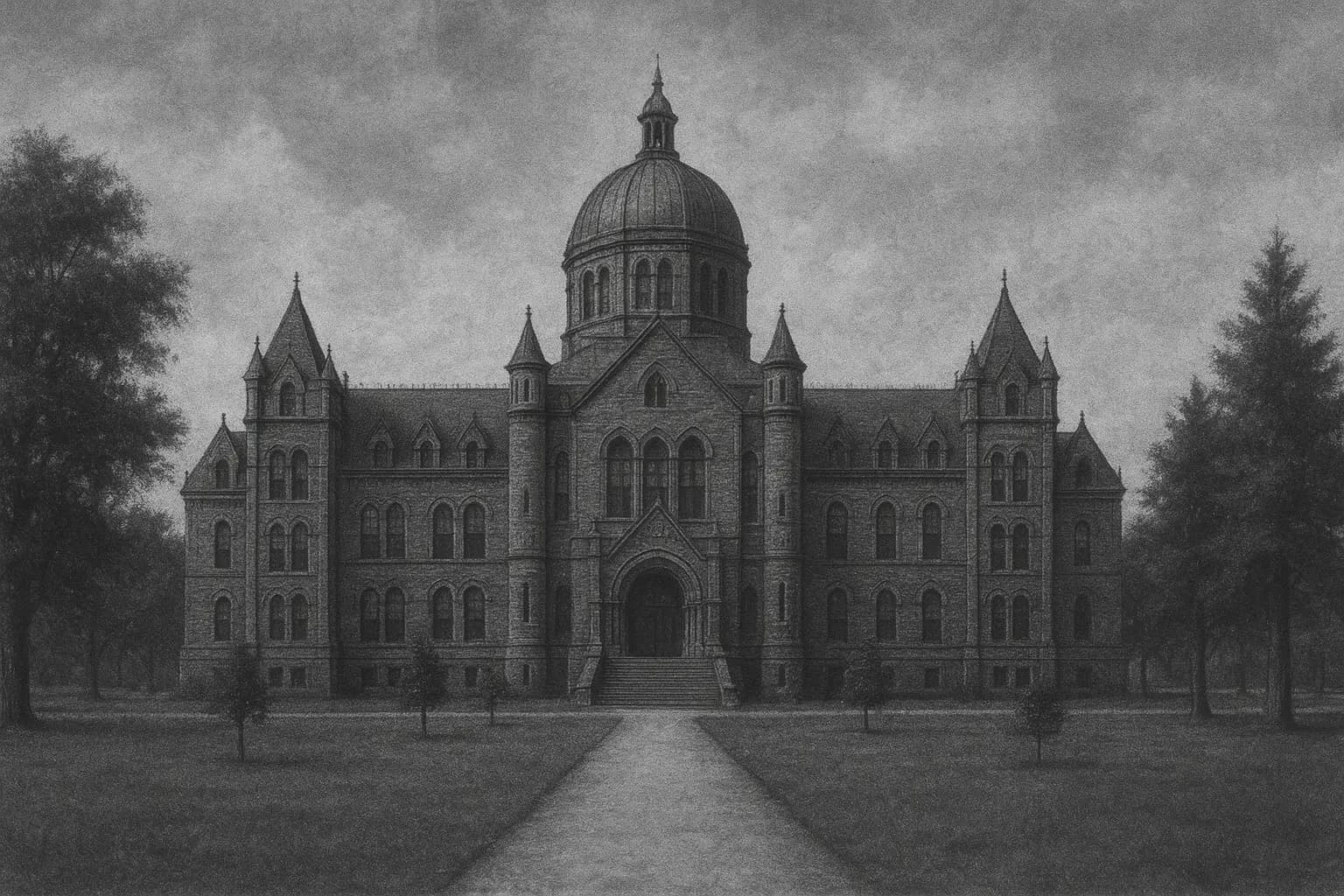
In the depths of history, there are places that are not mere geographical points, but concentrations of ideas and light—beacons that have cast their glow upon the darkest corners of time. For 13th and 14th-century Armenia, Gladzor University was such a beacon. When we try to imagine it today, our minds are drawn to the mystical mountains of Vayots Dzor, where, far from the worldly noise, wisdom was accumulated, manuscripts were created, and the intellect was forged within a medieval monastic complex. The modern parallel to "the Armenian Hogwarts," though romantic, is surprisingly apt. It was truly a hidden fortress of knowledge, art, and spirit in an era when the nation was groaning under Mongol rule.
Gladzor was not merely a seminary or a high school. In its structure, curriculum, system of awarding academic degrees, and the depth of its intellectual life, it was on par with the finest European universities of its time—Bologna, Paris, or Oxford. It was a place where the elite of Armenian medieval thought was born: scientists, theologians, philosophers, miniature painters, and statesmen who would become the guardians of the national identity for centuries to come.
This article is a journey into that lost world. We will discover the historical circumstances that gave birth to this center of thought, what was studied and how its students lived within its walls, who its great teachers and pupils were, and what constitutes the immortal legacy of Gladzor, the spirit of which can still be felt today.
Chapter 1: The Historical Context: A World in Turmoil
In the mid-13th century, Armenia was at the epicenter of a historical cataclysm. Following the fall of the powerful Bagratid Kingdom, the country was fragmented, and the brief ascent and cultural renaissance under the Zakarid dynasty were thwarted by a new, more terrifying disaster: the Mongol invasions. Beginning in the 1230s, the armies of Genghis Khan's heirs swept across the Armenian Highlands, leaving behind a trail of devastation, death, and despair.
The Mongol dominion, under the Ilkhanate of the Hulavus, was not only a military yoke but also a heavy economic and cultural burden. Unprecedentedly high taxes, forced conscriptions, and the arbitrary will of the rulers were destroying the country's economy. Glorious cities like Ani were being deserted, and the people lived in a state of constant insecurity.
It was precisely under these conditions that the survival instinct of the Armenian people manifested itself in its most creative form. As political power weakened, the mission of preserving and developing the national identity was taken up by two main forces: the Armenian Apostolic Church and the noble houses. Monasteries and hermitages became not only spiritual but also educational, scientific, and cultural centers—true fortresses where the Armenian script and intellect were safeguarded.
During this period, the role of the local nobility - specifically the Orbelian and Proshian princely houses - was particularly crucial. As vassals to the Mongols, they managed to maintain a degree of autonomy in their domains of Syunik and Vayots Dzor through skillful diplomacy. They became patrons of science and art, taking monasteries and educational centers under their protection. It was in this relatively sheltered environment, under the patronage of the Proshian princes, that the founding and flourishing of Gladzor University became possible. It was born as the Armenian mind's response to the challenges of history, as proof that the power of the mind could stand against the power of the sword.
Chapter 2: The Founding: A Fortress of the Mind
Gladzor University did not emerge from a vacuum. It was nourished by the traditions of Armenia's earlier educational centers: Ani, Haghpat, Sanahin, Goshavank, and Kecharis. However, Gladzor represented a qualitative leap forward. Historians have long debated its precise location. Today, the accepted view is that the university operated at the Tanade Monastery, near the modern village of Vernashen, with some activities also taking place at the nearby Aghberkts Monastery. The choice of location was not accidental; the mountains of Vayots Dzor provided natural defense and the isolation necessary for uninterrupted intellectual work.
The founding of the university is generally dated to 1280-1282, although academic life had begun there earlier. However, Gladzor reached its pinnacle of glory and was established as a university during the rectorship of the great thinker, theologian, and pedagogue, Esayi Nchetsi (c. 1260/65 – 1338). It was Nchetsi who systematized the curriculum, established the procedure for awarding academic degrees, and gathered the finest intellectuals of the time around him.
Esayi Nchetsi was an exceptional individual. He was not only a profound theologian but also a grammarian, rhetorician, philosopher, and commentator. His work, "A Commentary on Grammar," served as a primary textbook for the Armenian language for centuries. Yet, his greatest talent was pedagogy. He was able to instill in his students not only knowledge but also free, critical thinking and high moral values. He treated his students as his own children, creating an atmosphere where teacher and student were equal partners on the path to seeking knowledge. It was this atmosphere that made Gladzor not just a school, but a true family of intellectuals.
Chapter 3: Inside the Walls: The Curriculum and Intellectual Life
The curriculum of Gladzor University was based on the educational model of medieval European universities - the "Seven Liberal Arts" - but enriched with the deep traditions of Armenian spiritual and philosophical thought. The education was divided into two main stages: the Trivium and the Quadrivium.
The Trivium
This was the foundation of the humanities, aimed at developing a student's logical reasoning, linguistic skills, and analytical abilities.
- Grammar (Grammatica): This was not merely the study of spelling rules. It was a deep exploration of Classical Armenian (Grabar) as a literary and scientific language. Students mastered the works of Dionysius Thrax, David the Grammarian, and, of course, Esayi Nchetsi. It was the art of understanding the world through language.
- Rhetoric (Rhetorica): This subject taught the art of constructing beautiful, persuasive, and logical speech. It was essential not only for future preachers but also for diplomats and statesmen. Students studied the orations of ancient and Armenian authors, seeking to master the subtleties of public discourse.
- Logic or Dialectics (Logica/Dialectica): This was the science of the structure of thought. Based on the works of Aristotle, Porphyry, and the great Armenian philosopher David the Invincible, students learned to debate, present arguments, uncover sophistries, and arrive at the truth.
The Quadrivium
This stage was dedicated to the exact sciences, which were perceived as a reflection of divine harmony in the material world.
- Arithmetic (Arithmetica): Students studied not only calculation but also the mystical, philosophical meaning of numbers. The foundation was the "Arithmetic" of Anania Shirakatsi.
- Geometry (Geometria): Through the study of Euclid's "Elements," students became acquainted with spatial reasoning, which was also necessary for architecture and astronomy.
- Astronomy (Astronomia): This was a subject of great practical importance. It was used to create the church calendar and determine the date of Easter. Students studied the movements of celestial bodies and solar and lunar eclipses.
- Music (Musica): Music was taught not as entertainment but as the science of cosmic harmony. Students learned the theory of church music, the modes, and the system of khaz—the Armenian medieval system of musical neumes.
After mastering these seven arts, students could proceed to higher education, delving into Theology, Philosophy, Medicine, Miniature Painting, and the Art of the Scribe. Gladzor housed a rich library-scriptorium (matenadaran), where dozens of manuscripts by Armenian and foreign authors were preserved and copied. It was here that the greatest intellectuals of the time worked, including the philosopher Hovhannes Vorotnetsi (who would later found the University of Tatev) and the incomparable architect and miniaturist Momik, whose delicate art adorns the finest manuscripts created at Gladzor.
Chapter 4: The Life of a Student and the Legendary Graduation Exam
Who were the students of Gladzor? They were young men from various provinces of Armenia, as well as from the Armenian Kingdom of Cilicia, who aspired to receive the rank of vardapet (an ecclesiastical and academic rank equivalent to a doctor of theology). The full course of study lasted for 7-8 years and demanded complete dedication.
A student's day was strictly regulated. It began with morning service, followed by lectures, practical sessions, and independent work in the library or the scriptorium (grchatun). The scriptorium was the heart of the university. Here, not only were old manuscripts copied, but new ones were created—the works of teachers and the theses of students. Every written page, every painted miniature, was a battle against oblivion.
However, the most famous and captivating tradition of Gladzor University was its graduation examination, which was a true intellectual challenge. It was so difficult that it became the subject of legend. History has preserved for us the episode of the examination of Nerses Mshetsi, one of Esayi Nchetsi's favorite students.
To defend their final thesis (diploma), a student was required to:
- Know the Bible by Heart: The graduate had to not only know the Holy Scripture by heart but also be able to interpret its most complex passages.
- Engage in Public Debate: The student had to publicly defend their scholarly thesis, answering the sharpest questions from teachers and other students. This was a true test of logic and rhetorical skill.
- Create an Original Work: They had to present their own commentary or philosophical treatise.
According to tradition, Nerses Mshetsi passed his examination brilliantly, but Esayi Nchetsi, wishing to test his humility, accused him of falling short. Nerses, without arguing, accepted his teacher's words. At that very moment, Nchetsi embraced him and declared that he had passed the most important test - the test of the soul. He was then ceremoniously awarded the vardapet's staff and a graduation certificate, which gave him the right to teach and preach. This tradition shows that at Gladzor, knowledge was inseparable from morality, and wisdom from humility.
Chapter 5: Legacy and Decline: The Flame Moves to Tatev
The golden age of Gladzor University lasted for about six decades. After the death of Esayi Nchetsi in 1338, the university began to gradually decline. This was exacerbated by the unstable political situation and the weakening of the patron princely houses. By the 1340s, Gladzor ceased to exist as a university.
But the flame of Gladzor was not extinguished. It simply moved to another location. Hovhannes Vorotnetsi, one of Esayi Nchetsi's most talented students, took his teacher's ideas and traditions, moved to Syunik, and founded the University of Tatev, which became the direct successor to Gladzor and the new beacon of Armenian thought. Furthermore, the alumni of Gladzor spread throughout Armenia, carrying with them the knowledge and spirit they had received in their "fortress of the mind."
The legacy of Gladzor University is immense:
- Education of the Intelligentsia: It trained several generations of clergy, scholars, scribes, and educators who preserved Armenian culture for centuries.
- Preservation of National Identity: Under Mongol rule, when the threat of assimilation was real, Gladzor became a center for the preservation and development of the Armenian language, literature, and theological thought.
- Advancement of Science: Armenian philosophical, grammatical, and natural scientific thought was developed here.
- The Art of the Manuscript: Some of the finest examples of Armenian miniature painting were created at Gladzor, which today adorn the museums and libraries of the world.
Conclusion
Today, as we look back at the legacy left by Gladzor, we understand that it was more than just a medieval university. It was a brilliant example of the Armenian people's survival strategy. In an era when it seemed that history had condemned the Armenians to disappearance, they chose the most powerful weapon: knowledge. They built not fortresses of stone, but fortresses of the mind, which remained impregnable to the enemy's sword and the corrosive power of time.
The name "the Armenian Hogwarts," in the end, is not so much about magic as it is about a miracle. It is the miracle of how the human mind, will, and faith can create islands of light in an ocean of darkness. Gladzor was just such an island, and its light, passed on to Tatev and then from generation to generation, has reached our days as a reminder that the true strength of a nation lies not in its weapons, but in its books and its knowledge.
Related articles
 HistoryJanuary 7, 2026
Iran: From a Millennial Empire to the Strict Mandates of the Islamic Republic
5 min read HistoryJanuary 7, 2026
Venezuela: The Tragic Phoenix of Latin America - From Oil Paradise to Geopolitical Nightmare
6 min read LifestyleDecember 9, 2025
Festive Tables Around the World: New Year's Traditions and Their Flavorful Nuances
9 min read HistoryDecember 8, 2025
The Spitak Earthquake: History and Statistics of a Catastrophe (December 7, 1988)
7 min read HistoryNovember 17, 2025
The Horrifying but True Story of a 5-Year-Old Who Became a Mother
4 min read HistoryNovember 7, 2025