
The Real Causes of the Fall of Ani: A Combination of Internal Division and External Aggression
When Walls Were Stronger Than Unity
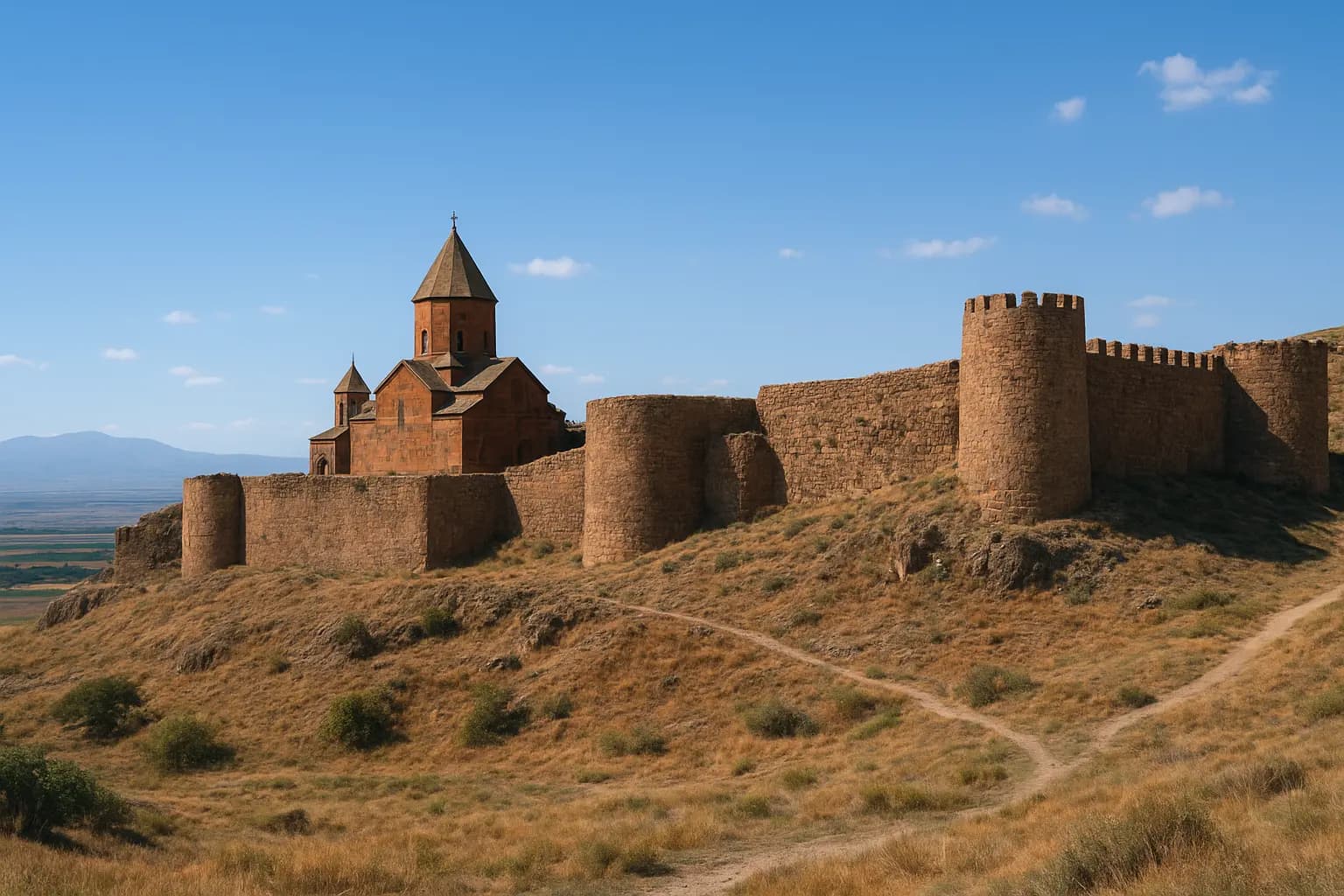
In the corridors of history, there are cities whose names have become synonymous not only with glory and civilizational ascent but also with tragic loss. Such a city is Ani, the mighty capital of Bagratid Armenia, known as the "City of 1001 Churches." Situated at one of the most crucial crossroads of the Silk Road, Ani in the 10th and 11th centuries was one of the world's largest metropolises, with a population estimated by some to have reached 100,000-200,000, rivaling Constantinople, Baghdad, and Cairo.
However, the fall of this glorious city to the Seljuk Turks in 1064 is often presented in a simplistic historical view as the result of a sudden and overwhelming blow by an external enemy. In reality, the destruction of Ani was not the consequence of a single battle or one siege. It was a complex, multi-layered process—a tragedy whose roots were deeply intertwined within the Armenian state itself, in the soil of political fragmentation, internal betrayal, and short-sighted decisions, which was then fertilized by the destructive policies of the Byzantine Empire and finally reaped by the Seljuk sword. The fall of Ani was not so much a conquest as it was a collapse from within.
Part I: The Zenith of Glory and its Internal Fissures
The "golden age" of Ani coincides with the reign of Gagik I Bagratuni (990–1020). During this period, the kingdom reached the pinnacle of its power. Ani was not just an administrative center but an economic giant. Bridges built over the Akhurian River connected the city to international trade routes leading to Persia, Mesopotamia, Byzantium, and the northern steppes. Crafts flourished; the artisans of Ani were renowned for their metalwork, pottery, jewelry, and textile production. The city was adorned with architectural masterpieces, the most famous of which is the Cathedral of Ani, built by the architect Trdat. Under Gagik I, the central authority was strong, and the 50,000-strong army was formidable.
However, behind this brilliant facade lay deep, systemic problems characteristic of Armenian statehood. The primary issue was the Armenian feudal system—the nakharar order. Unlike European feudalism, where a vassal received land in exchange for service, the Armenian nakharars were representatives of ancient, hereditary clans who considered their domains their inalienable property. They had their own armies, courts, and often acted based on their narrow clan interests rather than national or state objectives. The Bagratid king, despite being the "king of kings," was in reality the first among equals and was constantly forced to balance the ambitions of various nakharar houses. This system inherently contained the danger of separatism and centrifugal tendencies, which exploded with full force after the death of Gagik I.
Part II: The Internal Decay: Dynastic Strife and a Fateful Testament
The death of Gagik I in 1020 became a turning point from which the decline of the Bagratid Kingdom began. The throne was supposed to be inherited by his eldest son, Hovhannes-Smbat III, but his younger brother, Ashot IV, who was distinguished by his belligerence and ambition, did not accept this reality. As a result, the kingdom was plunged into a destructive civil war.
This conflict exposed all the flaws of the nakharar system. The noble houses, instead of uniting around the legitimate king to preserve the stability of the state, split into two camps. Some supported Hovhannes-Smbat, others backed Ashot, based on their own political and economic interests. Years of war depleted the country's military and economic resources, weakened the central government, and demoralized the population.
In this chaos, Hovhannes-Smbat, being a weak and indecisive ruler, made a decision that can be considered tantamount to national treason. Fearing his brother and external threats, he sought the help of the Byzantine Emperor Basil II "the Bulgar-Slayer." In a treaty signed in Trebizond in 1022, Hovhannes-Smbat willed his kingdom, including the capital city of Ani, to the Byzantine Empire upon his death. This was a catastrophic diplomatic failure. Instead of strengthening his own position and seeking internal consolidation, Hovhannes-Smbat simply gave Byzantium a legal basis to annex the heart of Armenia in the future. This will became the Damoclean sword that hung over Ani for the next two decades.
Part III: The Byzantine "Embrace of Death"
For centuries, the Byzantine Empire pursued a duplicitous policy towards Armenia. On the one hand, a strong and independent Armenia served as an important buffer zone against eastern threats. On the other hand, Constantinople always sought to establish direct control over the strategic territories of the Armenian Highlands. In the early 11th century, as a new, formidable power appeared in the east—the Seljuk Turks—Byzantium adopted a short-sighted and self-destructive policy. The emperors mistakenly believed that eliminating the Armenian kingdoms and directly annexing their territories would strengthen the empire's eastern frontier.
Hovhannes-Smbat's will became the key to implementing this policy. In the early 1040s, after both Hovhannes-Smbat and Ashot IV had died, Byzantium immediately demanded the fulfillment of the will's terms. The Armenian throne had been ascended by Ashot's son, the young and brave Gagik II, who attempted to resist Byzantine pressure. He was a talented commander and managed to win several victories against Byzantine forces, temporarily restoring the kingdom's integrity.
However, Gagik's efforts were thwarted by internal betrayal. A significant part of the Armenian nakharar elite, led by the pro-Byzantine leader Vest Sarkis, placed their personal and clan interests above national independence. They believed that their domains and privileges would be more secure under Byzantine rule. This faction began negotiations with the Byzantines behind Gagik II's back.
The culmination of this betrayal was the luring of Gagik II to Constantinople under false pretenses. In 1045, Emperor Constantine IX Monomachos, promising friendly negotiations, invited Gagik to the capital. As soon as the last king of Armenia arrived in Constantinople, he was arrested and forced to abdicate his throne in exchange for estates in Cappadocia. Meanwhile, the pro-Byzantine forces in Ani, led by Vest Sarkis, handed the city's keys to the Byzantine army. Thus, without a major battle, the heart of Bagratid Armenia, Ani, became a Byzantine province.
Following the annexation, Byzantium took a step that predetermined the fate not only of Ani but of all of Armenia. They disbanded the national Armenian army. This 50,000-strong force, which had defended the country for centuries, whose soldiers were intimately familiar with the mountainous terrain and tactics, was simply dissolved. In its place, the Byzantines imposed a monetary tax, promising to defend the borders with their own imperial legions. However, the Byzantine forces were composed of mercenaries of various nationalities who had no connection to the Armenian land and were indifferent to the fate of the local population. The empire, in effect, disarmed Armenia, leaving it defenseless and vulnerable before a new, relentless enemy.
Part IV: The Final Blow: The Seljuk Hurricane
While Ani was suffering from internal strife and Byzantine domination, dark clouds were gathering on the eastern horizon. The movement of the Seljuk Turks, which originated in the steppes of Central Asia, had turned into a veritable storm by the mid-11th century. Led by Tughril Beg and his successor Alp Arslan, they had created a vast empire, stretching over Persia and Mesopotamia. Their advance westward would inevitably collide with the Armenian Highlands.
The first Seljuk campaigns, which began in the 1040s, were mostly reconnaissance and plundering raids. They mercilessly devastated cities and villages, took the population captive, and spread terror. The capture and massacre of the city of Arzen in 1049 shocked the entire region. The Byzantine Empire, which had committed to defending Armenia, demonstrated its complete incompetence. Their slow-moving, multi-ethnic armies could not effectively counter the swift, nomadic cavalry of the Seljuks. The Armenians, deprived of their own army, were left to the mercy of fate.
The fateful moment for Ani arrived in 1064. The Seljuk Sultan Alp Arslan, entering Armenia with a massive army, marched towards the "City of 1001 Churches." At that time, Ani was a city defended by a Byzantine garrison. However, the defense was doomed from the start. The Byzantine troops lacked the morale to defend a city that was foreign to them. The Armenian population of the city, demoralized by decades of instability and deprived of its own military force, could not organize an effective resistance.
After a brutal 25-day siege, during which the Seljuks used powerful siege engines, the city walls gave way. What followed was beyond human imagination. According to contemporary chroniclers, including Aristakes Lastivertsi, an unprecedented massacre took place in the city. The streets filled with blood, churches were looted and desecrated, and buildings were burned. Hundreds of thousands of people were killed or enslaved. The city, which for centuries had been the center of Armenian thought, culture, and spirituality, was reduced to ruins. The fall of Ani was a shocking blow not only to the Armenian people but to the entire Christian world.
Conclusion: A Confluence of Catastrophes
In summary, it can be confidently asserted that the fall of Ani did not have a single cause. It was a chain of catastrophic events where internal weaknesses and external pressures intertwined, creating the perfect conditions for destruction.
- Internal Division: The centrifugal nature of the nakharar system, which manifested in the civil war between the sons of Gagik I, dealt a fatal blow to the state's unity and military potential.
- Political Short-sightedness and Betrayal: Hovhannes-Smbat's fateful will gave Byzantium a legal pretext to intervene and ultimately annex the kingdom. The betrayal of pro-Byzantine nakharars, which led to the deposition of Gagik II, finally destroyed the independent Armenian state.
- Destructive Byzantine Policy: By eliminating the Armenian kingdom and dissolving its national army, Byzantium did not strengthen its eastern frontier but, on the contrary, made it vulnerable and defenseless against the Seljuk invasion.
- The Seljuk Invasion: The powerful Seljuk strike was the final, lethal factor. However, it struck a body that was already mortally ill from within.
The tragedy of Ani is a historical lesson on how internal discord, the prioritization of personal interests over state interests, and flawed policies toward powerful neighbors can lead to the destruction of the greatest civilizations. The ruins of Ani today are not just a monument to a lost glory but also an eternal warning to future generations about the price of national unity and the consequences of disunity.
Related articles

 HistoryJanuary 7, 2026
Iran: From a Millennial Empire to the Strict Mandates of the Islamic Republic
5 min read HistoryJanuary 7, 2026
Venezuela: The Tragic Phoenix of Latin America - From Oil Paradise to Geopolitical Nightmare
6 min read LifestyleDecember 9, 2025
Festive Tables Around the World: New Year's Traditions and Their Flavorful Nuances
9 min read HistoryDecember 8, 2025
The Spitak Earthquake: History and Statistics of a Catastrophe (December 7, 1988)
7 min read HistoryNovember 17, 2025
The Horrifying but True Story of a 5-Year-Old Who Became a Mother
4 min read HistoryNovember 7, 2025