
The Forgotten Tragedy of Dvin: The Armenian Capital Swallowed by an Earthquake
Once the beating heart of medieval Armenia, Dvin was a bustling metropolis - the political, cultural, and economic capital of Eastern Armenia for over four centuries. Its royal palaces, majestic cathedrals, and thriving markets made it one of the most important cities in the Caucasus.
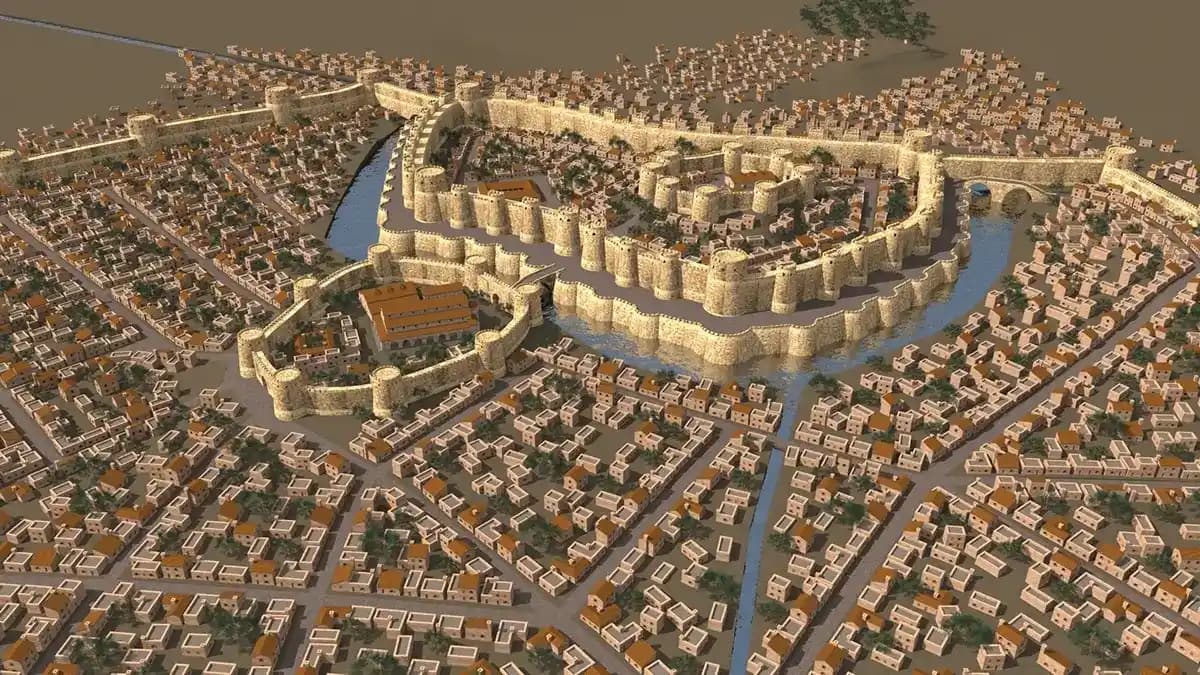
Օn a cold winter night in 893 AD, fate struck without warning.
A catastrophic earthquake tore through the region, burying tens of thousands of lives beneath the ruins and forever changing the course of Armenian history.
Today, Dvin lies silent - its ruins scattered across the Ararat plains, hiding stories of glory, destruction, and forgotten resilience.
Dvin: The Beating Heart of Medieval Armenia
Founded in the early 4th century by King Trdat III the Great, Dvin quickly became the epicenter of Armenian life:
- It served as the capital of Eastern Armenia for more than 400 years.
- Hosted the royal palaces of the Arsacid dynasty.
- Became the seat of the Armenian Catholicos - the spiritual leader of the nation.
- Its location on major caravan trade routes made it one of the largest commercial hubs of its time.
At its peak, Dvin’s population is estimated to have reached over 100,000 people — an extraordinary number for the medieval world.
December 28, 893: The Night the Earth Shook
Late in the evening of December 28, 893, a violent earthquake struck the Ararat plain. Modern seismologists estimate its strength at magnitude 7.0–7.5.
Contemporary chroniclers described scenes of apocalyptic devastation:
- Royal palaces collapsed instantly.
- The Great Cathedral of Dvin, a masterpiece of medieval Armenian architecture, was reduced to rubble.
- Fires broke out across the city, fueled by broken oil lamps and collapsing wooden roofs.
- More than 70,000 people are believed to have perished that night — including Catholicos Johannes IV of Odsun.
Medieval historian Hovhannes Draskhanakerttsi wrote:
“The earth trembled so violently that beasts and men fell as if struck down by an unseen hand.
Columns and domes disappeared like dust,
and mighty Dvin became a tomb for its people.”.
Why Dvin Never Recovered
In the aftermath, there were attempts to rebuild the city, but Dvin never regained its former grandeur:
- Located on a highly seismic fault zone, the city remained vulnerable.
- Key trade routes shifted to bypass the ruined capital.
- Continuous Arab invasions and regional conflicts further weakened the area.
By the 10th century, Dvin had lost its status as the capital — first to Kars, and later to the magnificent city of Ani.
Legends Beneath the Ruins
The tragedy of Dvin inspired centuries of legends:
- Locals believed a massive fissure opened beneath the city, swallowing entire neighborhoods.
- Some interpreted the disaster as divine punishment for the people's sins.
- Hidden beneath the earth, archaeologists have since discovered underground tunnels and vaulted chambers, revealing secrets of a once-mighty capital.
Excavations show that Dvin is a layered city — centuries of construction piled on top of each other, with collapsed walls and buried relics stacked like the pages of history.
Dvin Today: A Silent Witness
Today, Dvin is a small village in Armenia’s Ararat Province. Its ruins stand as silent witnesses to an empire’s lost glory:
- Archaeologists have uncovered the foundations of the Great Cathedral,
- remains of royal palaces,
- and ancient stone inscriptions that still whisper stories of prosperity and faith.
Visiting Dvin today feels like stepping into a forgotten world — one where every stone carries the memory of thousands of lives lost in a single night.
Lessons from a Forgotten Disaster
The destruction of Dvin is more than a medieval tragedy — it’s a reminder:
- Armenia lies in a highly active seismic zone.
- Earthquakes have shaped the destinies of Armenian cities for centuries.
- Ignoring history often means repeating its mistakes.
Modern seismic experts frequently reference Dvin when discussing the Yerevan fault line, warning that past catastrophes are not just history — they are possibilities.
A Symbol of Human Fragility
Dvin’s fall symbolizes the impermanence of human achievement:
- A city that once rivaled Constantinople in influence,
- A center of religion, trade, and art,
- Reduced to dust in a matter of minutes.
And yet, beneath that fragility lies resilience — for the Armenian people rebuilt, moved forward, and carved out new centers of culture and power.
Conclusion
The forgotten tragedy of Dvin reminds us of one simple truth:
No city is eternal.
Once the jewel of medieval Armenia, Dvin was swallowed by the earth in a single night, taking tens of thousands of lives and altering the country’s history forever.
But its story still lives — buried beneath the ruins, etched into chronicles, and whispered in the wind that sweeps across the Ararat plains.
To walk through Dvin today is to stand on the edge of glory and loss, listening to a city that refuses to be silenced.
Related articles
 HistoryJanuary 7, 2026
Iran: From a Millennial Empire to the Strict Mandates of the Islamic Republic
5 min read HistoryJanuary 7, 2026
Venezuela: The Tragic Phoenix of Latin America - From Oil Paradise to Geopolitical Nightmare
6 min read LifestyleDecember 9, 2025
Festive Tables Around the World: New Year's Traditions and Their Flavorful Nuances
9 min read HistoryDecember 8, 2025
The Spitak Earthquake: History and Statistics of a Catastrophe (December 7, 1988)
7 min read HistoryNovember 17, 2025
The Horrifying but True Story of a 5-Year-Old Who Became a Mother
4 min read HistoryNovember 7, 2025