
Cilician Armenia - ally of the crusaders and the Armenian navalpower
From King Levon to the Lusignan dynasty - the golden age and fall of Cilicia
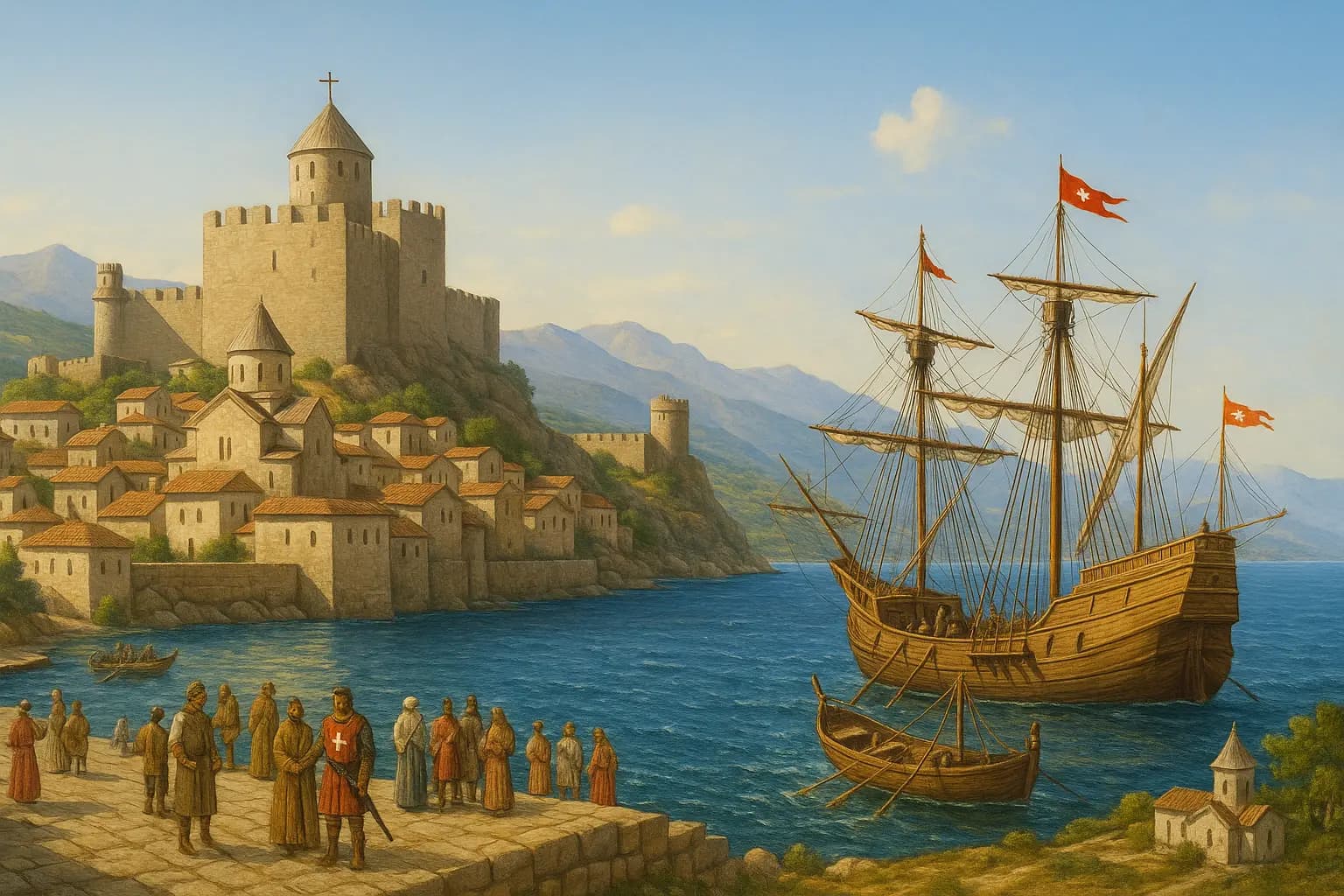
Cilician Armenia was founded in 1080, when the Bagratuni dynasty and other noble houses, having lost their ancestral lands in Eastern Armenia due to the Seljuk invasions, moved south to the mountainous region of Cilicia. The territory, rich in natural defenses and with access to the Mediterranean Sea, became the basis for a new Armenian state.
The founding rulers came from the Rubenid dynasty, establishing what became known as the Armenian Kingdom of Cilicia. Initially a principality, the state soon grew into a recognized kingdom.
Alliance with the crusaders
During the First Crusade in 1096, Armenians became indispensable allies to the crusaders:
- Armenian forces assisted the crusaders in capturing Antioch (1098).
- In the County of Edessa (1098-1149), Armenians formed the majority of the population, and intermarriages between Armenian nobility and crusader leaders were common.
- The Armenians provided not only military support but also crucial knowledge of the local terrain.
King Levon I the Magnificent (1198-1219) secured the coronation of Cilician Armenia, with recognition from both the Holy Roman Emperor and the Pope, elevating Armenia into the ranks of European monarchies.
The navy and commercial power
One of Cilicia’s greatest strengths was its access to the sea.
- The port of Ayas became a major hub of international trade. Branches of the Silk Road flowed into it.
- Armenian ships transported both goods and soldiers, often fighting alongside crusader fleets.
- By the 13th century, Ayas was considered one of the largest ports in the East, hosting Italian merchant colonies from Venice and Genoa.
Through maritime commerce, Cilician Armenia became not only a military ally but also an economic powerhouse.
Cultural and economic flourishing
Cilician Armenia experienced a renaissance in both economy and culture:
- Translations of Greek and Latin works enriched Armenian scholarship.
- The Cilician school of miniature painting flourished, producing masterpieces still admired today.
- The kingdom maintained diplomatic ties with France, England, Germany, and Italy, integrating itself into European political life.
Wars with mamluks and mongols
From the mid-13th century, Cilicia faced new threats.
- At first, it allied with the Mongols against the Seljuks, providing troops and support.
- However, repeated Mamluk invasions from Egypt devastated the country.
- In 1375, Cilicia fell to the Mamluks. The last king, Levon V Lusignan, was captured and taken to Cairo as a prisoner.
Legacy of Cilician Armenia
Despite its fall, Cilician Armenia left an enduring mark on Armenian and world history. It showed that even far from their ancestral homeland, Armenians could build a strong and internationally recognized kingdom. Cilicia stood as a symbol of Armenian statehood, diplomacy, and maritime power for centuries.
Related articles

 HistoryJanuary 7, 2026
Iran: From a Millennial Empire to the Strict Mandates of the Islamic Republic
5 min read HistoryJanuary 7, 2026
Venezuela: The Tragic Phoenix of Latin America - From Oil Paradise to Geopolitical Nightmare
6 min read LifestyleDecember 9, 2025
Festive Tables Around the World: New Year's Traditions and Their Flavorful Nuances
9 min read HistoryDecember 8, 2025
The Spitak Earthquake: History and Statistics of a Catastrophe (December 7, 1988)
7 min read HistoryNovember 17, 2025
The Horrifying but True Story of a 5-Year-Old Who Became a Mother
4 min read HistoryNovember 7, 2025