
The Mongol Invasions - How Genghis Khan Changed the World Map
The early 13th century marked one of the greatest turning points in world history. Emerging from the steppes of Asia, the Mongol tribes, under the leadership of Genghis Khan, created the largest contiguous land empire in human history.
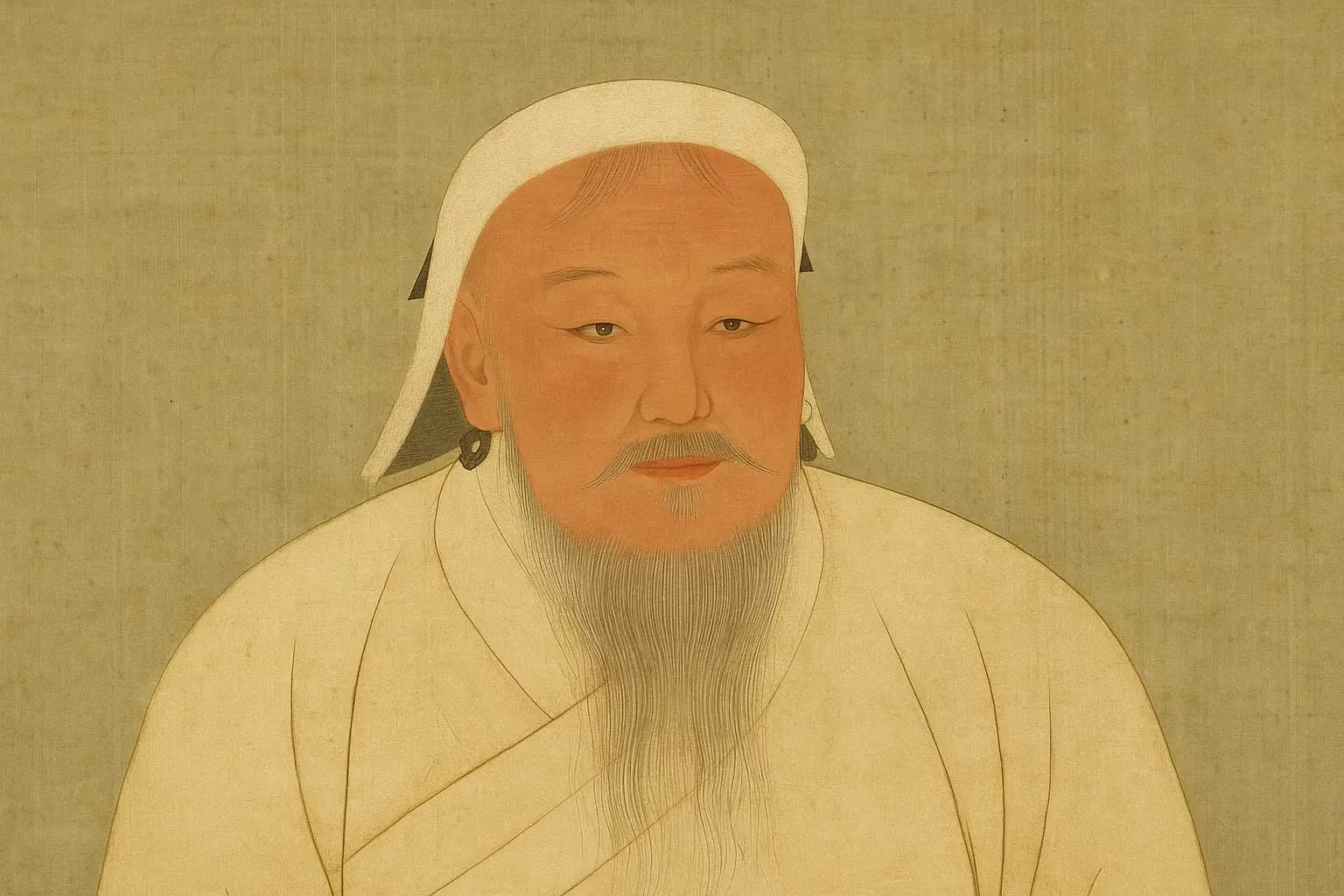
The Mongol invasions not only redrew the political map but also reshaped international trade routes, cultural exchanges, and the very perception of interstate relations.
Rise of Genghis Khan
- Genghis Khan (born Temüjin, 1162) came from the family of a minor chieftain.
- His childhood was marked by hardship, betrayal, and survival.
- Through skill and determination, he united the fragmented Mongol tribes and built a powerful political and military system.
- In 1206, at a great council (kurultai), Temüjin was proclaimed Genghis Khan – "Universal Ruler."
The Military machine and innovations
The Mongol army succeeded due to several key factors:
- Strict discipline and hierarchy.
- Highly mobile cavalry, capable of rapid and devastating strikes.
- An advanced intelligence and communication system.
- Siege technologies borrowed from China and the Islamic world.
Their "decimal system" divided the army into units of tens, hundreds, thousands, and ten-thousands (tumen).
Campaigns in China and Central Asia
- Genghis Khan first targeted the Tanguts and the Jin Dynasty in northern China.
- Cities like Zhongdu (modern Beijing) fell after brutal sieges.
- In Central Asia, the Mongols crushed the Khwarazmian Empire, destroying Samarkand, Bukhara, and Urgench.
Control over these regions gave the Mongols dominance over key sections of the Silk Road.
Campaigns in Persia, the Caucasus, and Rus
- In the 1220s, the Mongols invaded Persia and the Caucasus.
- Armenian and Georgian lands also faced their attacks; by 1220, Mongol forces reached the Armenian Highlands.
- In 1223, at the Battle of the Kalka River, the Mongols annihilated a coalition of Rus princes and Cuman allies.
At Europe’s gates
After Genghis Khan’s death in 1227, his descendants continued the conquests.
- Batu Khan, his grandson, led the Golden Horde.
- The Mongols destroyed Kiev (1240) and advanced into Hungary.
- Europe stood on the brink of invasion, but the Mongols withdrew due to succession disputes back in Mongolia.
Reshaping the world map
By the 1270s, the Mongol Empire stretched from China to Eastern Europe – about 33 million km², the largest empire in history.
Consequences included:
- Control of the Silk Road, linking East and West more closely than ever.
- The "Pax Mongolica" encouraged trade, travel, and the spread of knowledge and technologies.
- Yet the destruction of cities and the deaths of millions left deep scars.
The Mongol invasions demonstrated how a relatively small nation, when united and strategically led, could alter the course of world history. Though the empire eventually fragmented, its legacy – in trade, culture, and geopolitics – continued to shape civilizations for centuries.
Related articles
 HistoryJanuary 7, 2026
Iran: From a Millennial Empire to the Strict Mandates of the Islamic Republic
5 min read HistoryJanuary 7, 2026
Venezuela: The Tragic Phoenix of Latin America - From Oil Paradise to Geopolitical Nightmare
6 min read LifestyleDecember 9, 2025
Festive Tables Around the World: New Year's Traditions and Their Flavorful Nuances
9 min read HistoryDecember 8, 2025
The Spitak Earthquake: History and Statistics of a Catastrophe (December 7, 1988)
7 min read HistoryNovember 17, 2025
The Horrifying but True Story of a 5-Year-Old Who Became a Mother
4 min read HistoryNovember 7, 2025