
Georgy Chicherin's Brilliant Answer to Turkey About Ararat and the Armenian Coat of Arms
Ararat: Above All Borders - The Diplomatic Retort That Made History
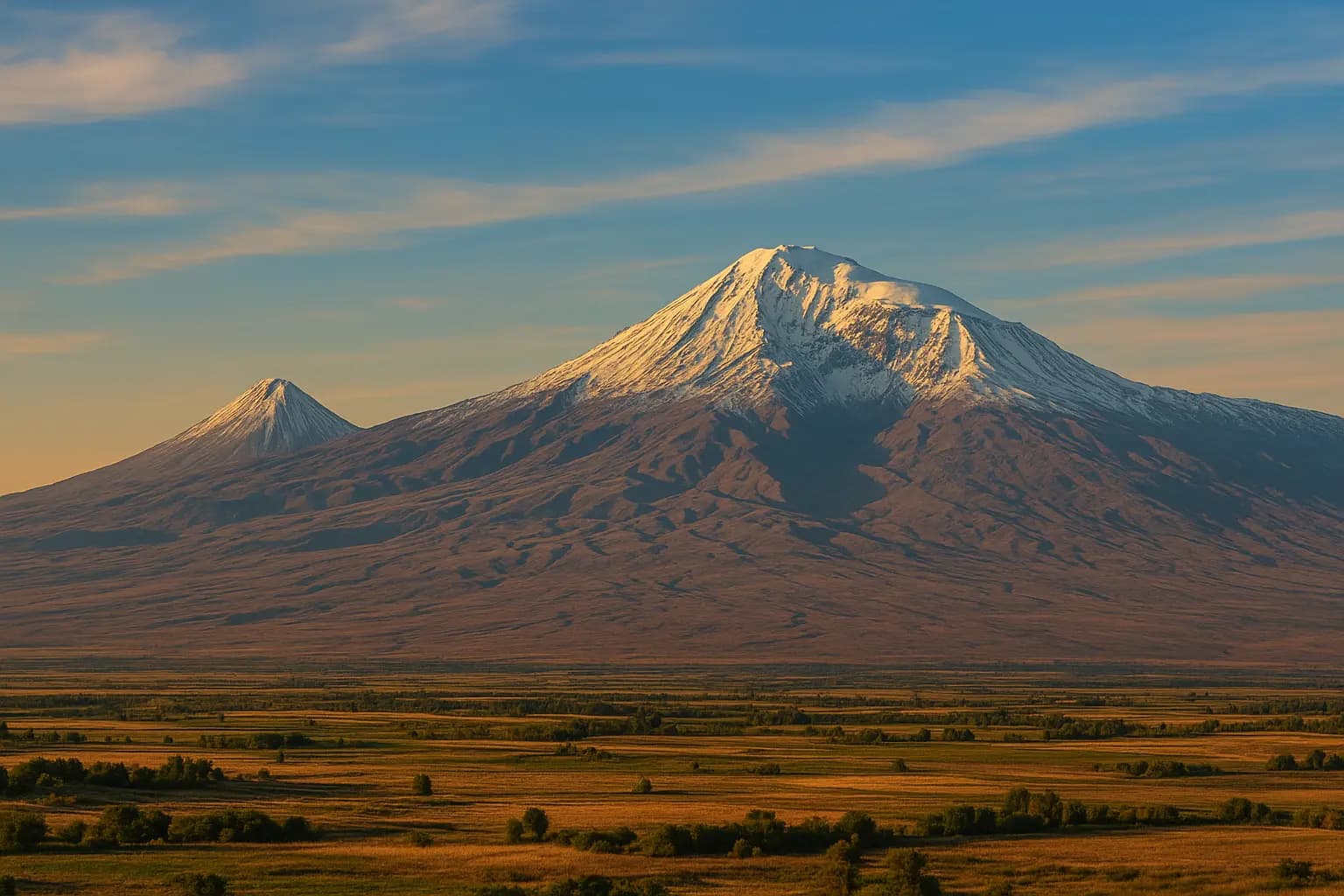
There are moments when a single, well-aimed sentence can achieve more than lengthy negotiations; when a sharp mind becomes a more powerful weapon than political pressure. In the 20th-century history of the Armenian people, one such episode is the story of Mount Ararat’s inclusion on the coat of arms of Armenia and the diplomatic clash that followed—a story whose resolution continues to inspire admiration to this day. This is a tale not just about a symbol, but about the inalienable right to national identity.
A Map of the Soul vs. Political Borders
The early 1920s were a devastating period for the Armenian people. Emerging from the horrors of the Genocide and the loss of the First Republic, the newly formed Soviet Armenia was attempting to build its future. The borders drawn by the Treaties of Moscow and Kars in 1921 left a deep wound in the national consciousness: Mount Ararat, the spiritual pillar of Armenian identity, now stood beyond the border, in Turkish territory.
It was under these circumstances that it became necessary to create a new map—one of the spirit and culture. In 1922, when work began on the state coat of arms for the Armenian SSR, this historic mission was undertaken by two geniuses: the painter Martiros Saryan and the architect Alexander Tamanian.
For Saryan, there was no dilemma. At the heart of the coat of arms had to be Ararat. This was not merely an artist's choice but a statement of principle. In response to questions about how he could depict a mountain that was physically in another country, the Master gave his famous answer:
"Ararat is the symbol of the Armenian people. No matter where an Armenian lives, in any corner of the world, his gaze is always turned towards Ararat. As an Armenian artist, I could not have painted it otherwise."
An Objection from Ankara and Chicherin's Brilliant Move
When the draft of the coat of arms became known, Kemalist Turkey lodged a formal protest. Turkish diplomats argued that this was a hostile act and a clear expression of territorial claims. "How can Armenia depict a mountain on its emblem that is located within our territory?" they demanded indignantly.
The issue reached Moscow, to the People's Commissariat for Foreign Affairs of the USSR. The man tasked with resolving it was Georgy Chicherin. A man of brilliant intellect and impeccable diplomatic skills, he faced a problem that required an unconventional solution.
During one of the negotiations, as the Turkish side once again voiced its demand, Chicherin, without raising his voice, calmly uttered a sentence that would become a classic of diplomatic wit:
"The flag of Turkey depicts a crescent moon. But, as far as I know, the Moon does not belong to Turkey."
For a moment, silence filled the hall. This simple yet unexpected comparison exposed the entire weakness of the Turkish argument. Chicherin brilliantly demonstrated that national symbols belong to the cultural and spiritual realm, not the geopolitical one.
The Triumph of a Symbol
Thus, Mount Ararat remained on the coat of arms of Armenia, becoming a symbol not only of longing for the homeland but also of the victory of national dignity. It adorned the emblem of Soviet Armenia for seventy years, and after the restoration of independence, it proudly took its place at the center of the current coat of arms of the Republic of Armenia.
This story reminds us that the true wealth of a nation is measured not in square kilometers but in the power of its symbols. And as the great Armenian poet Hamo Sahyan wrote, Ararat is "the stone seal on our birth certificate."
That seal cannot be erased, and as long as the eyes of Armenians are turned towards their mountain, it will always remain theirs—above all borders and beyond all maps.
Related articles
 HistoryJanuary 7, 2026
Iran: From a Millennial Empire to the Strict Mandates of the Islamic Republic
5 min read HistoryJanuary 7, 2026
Venezuela: The Tragic Phoenix of Latin America - From Oil Paradise to Geopolitical Nightmare
6 min read LifestyleDecember 9, 2025
Festive Tables Around the World: New Year's Traditions and Their Flavorful Nuances
9 min read HistoryDecember 8, 2025
The Spitak Earthquake: History and Statistics of a Catastrophe (December 7, 1988)
7 min read HistoryNovember 17, 2025
The Horrifying but True Story of a 5-Year-Old Who Became a Mother
4 min read HistoryNovember 7, 2025