
Agatha Christie’s 11-Day Disappearance: The Real-Life Mystery Even Poirot Couldn’t Solve
Agatha Christie, the Queen of Crime, whose books have sold over 2 billion copies worldwide, built entire worlds where every clue mattered, every twist had purpose, and the detective always solved the case.
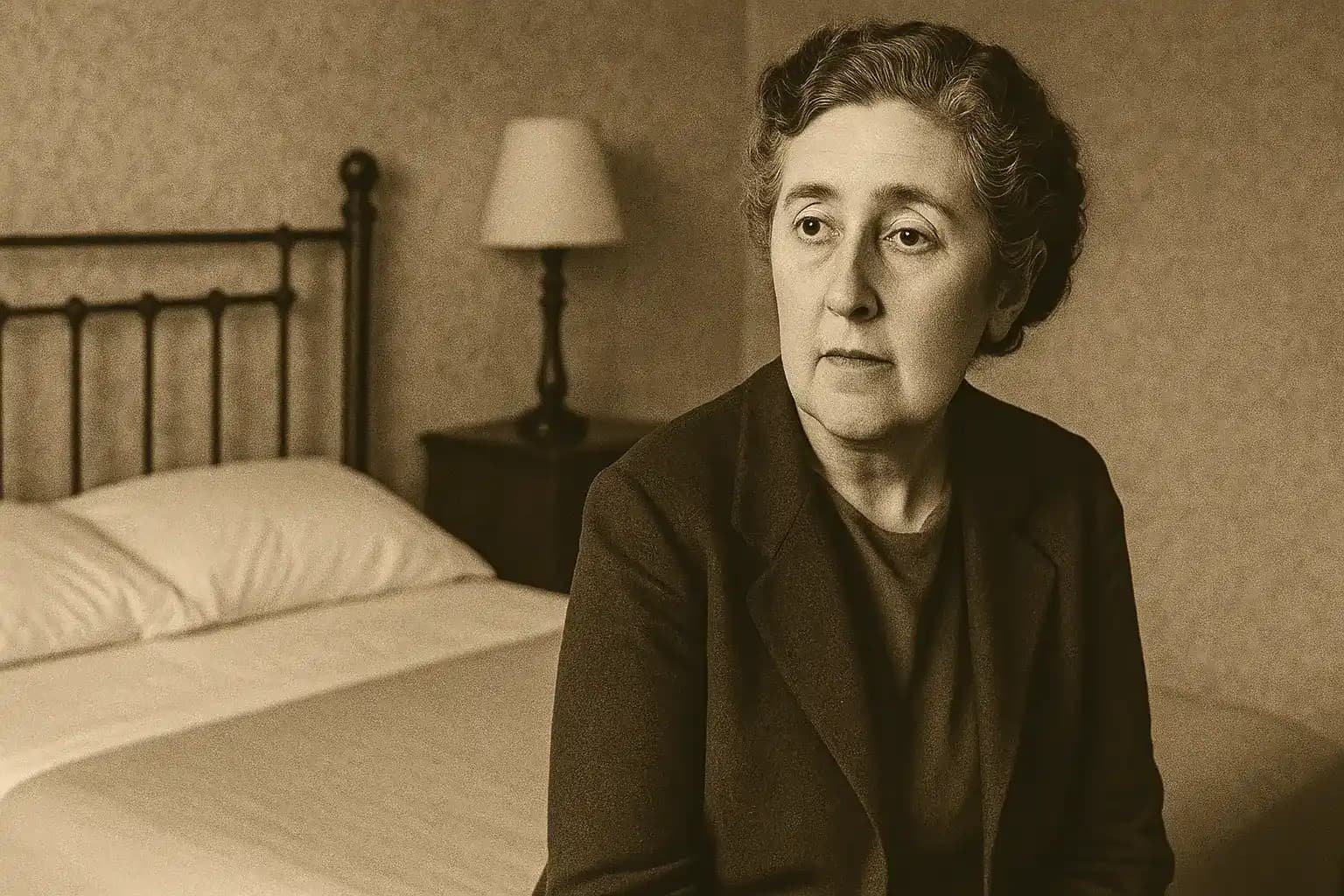
But in the winter of 1926, Agatha herself became the subject of a mystery so strange and perplexing that even Hercule Poirot couldn’t have pieced it together.
On the night of December 3rd, she left her home without a word, got into her small car, and vanished. Hours later, her car was found abandoned by a lake - headlights on, a fur coat left inside, driver’s license on the seat.
For the next 11 days, Britain - and soon the entire world - descended into a frenzy of speculation. Was it suicide? Murder? A calculated act of revenge?
And when Agatha was finally found in a luxury hotel, registered under a false name - the same name as her husband’s mistress - the mystery only deepened.
This is the full story, with facts, theories, and the unsolved questions that still haunt us nearly a century later.
The Year Everything Fell Apart
1926 was the most turbulent year of Agatha Christie’s life:
- Her mother, Clara Christie, died in April - a devastating emotional blow.
- Her husband, Archibald Christie, confessed he had fallen in love with a younger woman, Nancy Neele.
- Meanwhile, Agatha was under intense pressure to finish her new novel, The Mystery of the Blue Train.
Friends described her as emotionally exhausted, trapped between grief and heartbreak. Biographers later suggested these months were the foundation for one of the strangest episodes in literary history.
The Night She Vanished
On the evening of December 3, 1926, at around 9:30 PM, Agatha left her Berkshire home in her Morris Cowley car. She kissed her seven-year-old daughter Rosalind goodnight, told the maid she was going out for a drive, and disappeared into the cold winter night.
Hours later, police discovered her car near Newlands Corner, a steep hill in Surrey:
- Headlights still on
- Fur coat inside
- Driver’s license left on the seat
- Tire marks suggested the car had skidded dangerously close to a drop
The scene looked like something straight out of one of her novels — but this time, there was no detective to solve it.
The Nation Becomes Obsessed
Agatha Christie was already a famous author in 1926, and her disappearance triggered one of the largest manhunts in British history:
- Over 1,000 police officers were deployed.
- 15,000 volunteers combed through forests, rivers, and lakes.
- Airplanes were used for aerial searches — a first in Britain’s history.
- Divers searched local lakes, fearing the worst.
Newspapers exploded with theories:
“Murder? Suicide? Or a Plot?”
“Where is Agatha Christie?”
“Queen of Crime Becomes Queen of Mystery”
Even Sir Arthur Conan Doyle, the creator of Sherlock Holmes, got involved. He handed one of Agatha’s gloves to a medium, hoping to trace her psychic energy.
It was front-page news across the world.
Archie Christie: The Prime Suspect
Agatha’s husband, Archibald Christie, quickly became the center of suspicion:
- Everyone knew about his affair with Nancy Neele.
- Witnesses reported that the couple had argued bitterly before she vanished.
- Some tabloids openly accused him of murder.
Archie denied any wrongdoing, insisting he believed his wife was alive but “mentally unwell.”
The pressure on him was immense, and his connection to Nancy only added fuel to the fire.
The Shocking Discovery
On December 14th, 11 days after her disappearance, police received a tip from staff at the Swan Hydropathic Hotel in Harrogate.
A woman staying there under the name “Theresa Neele” — yes, the same surname as Archie’s mistress — matched Agatha’s description.
When police arrived, they found Agatha calmly reading a newspaper in the hotel lounge. She showed no recognition of her husband, the officers, or even her own name.
She claimed she had no memory of the past 11 days.
Dissociative Amnesia — Or Something Else?
Doctors diagnosed Agatha with dissociative fugue, a rare psychological state triggered by extreme emotional stress.
- She may have suffered a complete mental break, fleeing her home and unconsciously adopting a new identity.
- Registering under Nancy Neele’s name, some experts suggest, could have been an unintentional reflection of her inner turmoil.
But not everyone buys the diagnosis. Over the decades, several other theories have emerged.
Three Main Theories
1. A Genuine Mental Breakdown
This is the official explanation:
- The combined weight of her mother’s death, marital betrayal, and professional stress pushed Agatha into a psychological crisis.
- She acted on autopilot, unaware of her surroundings, until her mind “reset.”
2. A Calculated Act of Revenge
Many biographers argue Agatha’s actions were too precise to be accidental:
- Abandoning the car by a lake, headlights on
- Registering at a hotel under her husband’s lover’s name
- Disappearing long enough for the world to panic
In this version, Agatha was sending Archie a message — and it worked. He was humiliated, vilified, and relentlessly pursued by the press.
3. A Publicity Stunt
A minority of critics suggest it was all orchestrated to boost book sales.
But this is the least convincing theory — Agatha hated the media frenzy and never used the disappearance to promote her work.
Agatha’s Silence
After returning home, Agatha never publicly addressed what happened during those 11 days.
- In interviews, she refused to answer questions.
- In her autobiography, she devoted just a single passing mention to the event, offering no explanation.
- Her family also stayed silent.
It was as though she sealed the mystery herself, leaving the world to speculate.
The Aftermath
Two years later, in 1928, Agatha divorced Archie.
- He went on to marry Nancy Neele.
- Agatha eventually remarried, finding lasting happiness with archaeologist Max Mallowan.
- Her career skyrocketed, producing classics like Murder on the Orient Express and Death on the Nile.
But the shadow of those missing 11 days never faded.
Why the Mystery Still Fascinates Us
Almost a century later, Agatha Christie’s disappearance remains one of the great unsolved mysteries of the 20th century.
It has everything:
- A vanishing act straight from a detective novel
- A cheating husband and a jealous mistress
- International headlines and mass hysteria
- And finally… a heroine who refuses to explain herself
In the end, Agatha Christie became the main character in her own detective story — one we’ll likely never solve.
Conclusion
Was Agatha Christie suffering from a mental breakdown?
Was she taking revenge on her unfaithful husband?
Or was this a moment when fiction and reality blurred beyond recognition?
Perhaps the true brilliance of Agatha’s life is this:
She wrote the perfect mystery — and then lived it.
To this day, the 11-day disappearance of the Queen of Crime remains her greatest unsolved case.
Related articles

 HistoryJanuary 7, 2026
Iran: From a Millennial Empire to the Strict Mandates of the Islamic Republic
5 min read HistoryJanuary 7, 2026
Venezuela: The Tragic Phoenix of Latin America - From Oil Paradise to Geopolitical Nightmare
6 min read LifestyleDecember 9, 2025
Festive Tables Around the World: New Year's Traditions and Their Flavorful Nuances
9 min read HistoryDecember 8, 2025
The Spitak Earthquake: History and Statistics of a Catastrophe (December 7, 1988)
7 min read HistoryNovember 17, 2025
The Horrifying but True Story of a 5-Year-Old Who Became a Mother
4 min read HistoryNovember 7, 2025