
Cryonics: Body Freezing and the Idea of Eternal Life
What is cryonics? Discover the science, costs, statistics, and ethical debates around freezing the human body in the hope of eternal life.
Introduction
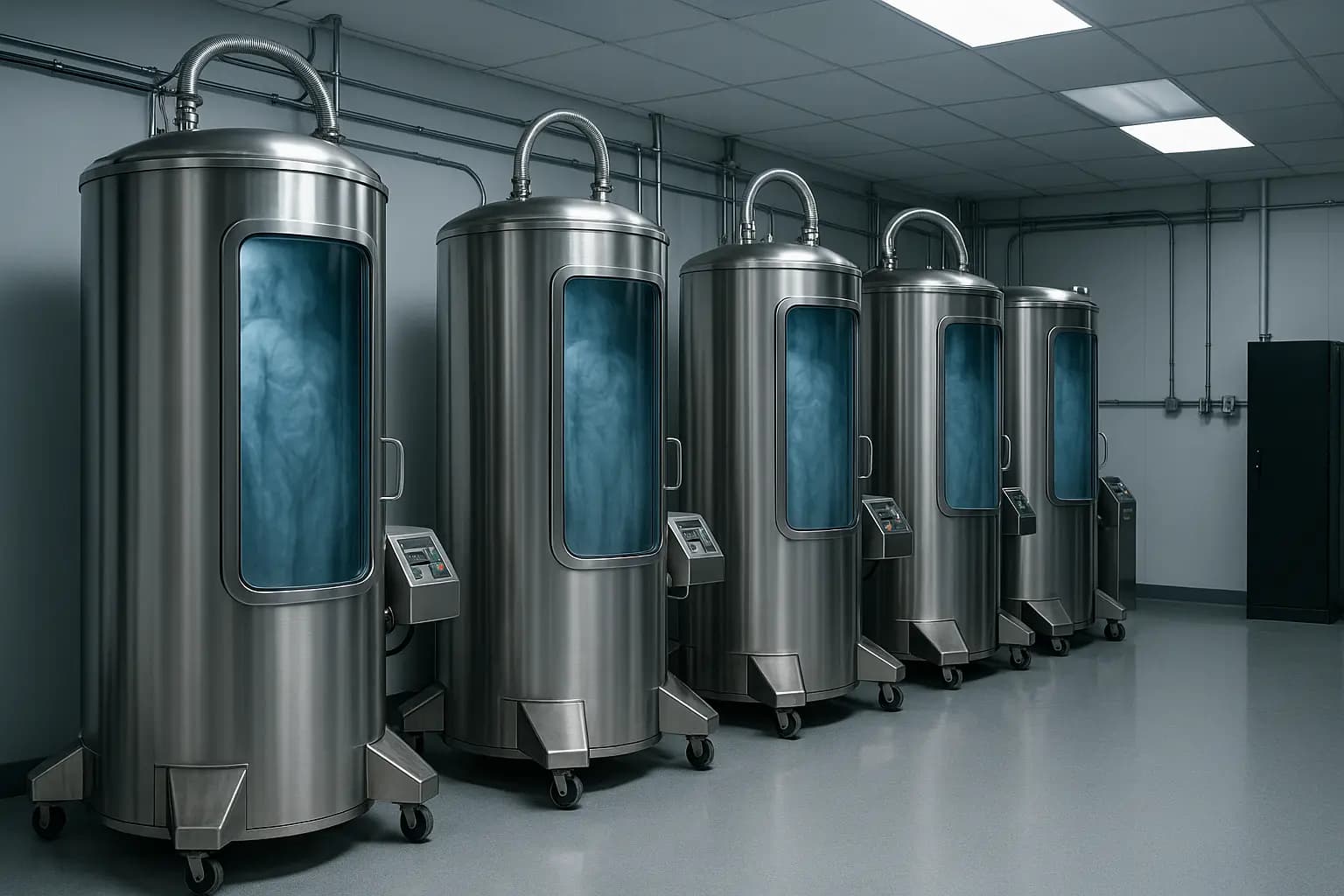
For centuries, humanity has been fascinated by the idea of immortality. What was once mythology has now taken on a scientific form: cryonics. Cryonics is the practice of preserving a dead person’s body or brain at extremely low temperatures, with the hope that future technology may bring them back to life.
How Cryonics Works
- After legal death, the body is cooled immediately.
- Blood is replaced with a cryoprotectant fluid that prevents ice crystals from forming inside cells.
- The body is stored in liquid nitrogen at -196°C.
- The core belief: in the future, medicine may be advanced enough to cure the cause of death and revive the patient.
Where Cryonics Is Practiced
Currently, only a few major organizations offer cryonics:
- Alcor Life Extension Foundation (USA) – the largest, with over 200 patients preserved.
- Cryonics Institute (USA, Michigan) – about 250 preserved members and 2,000 signed-up members.
- KrioRus (Russia) – the first cryonics facility outside the USA.
As of 2024, there are around 500 people frozen worldwide, with 5,000 more signed up for future preservation.
How Much Does Cryonics Cost?
Cryonics is expensive:
- Full-body preservation – around $200,000.
- Brain-only (neuropreservation) – around $80,000–100,000.
- Many people use life insurance policies so that their preservation is funded upon death.
Current Scientific Status
Cryonics is not a proven medical technology. No human or animal has been successfully frozen and revived. However:
- Since the 1980s, scientists have successfully frozen and thawed sperm, eggs, and small embryos that developed normally.
- In 2016, researchers preserved a mouse brain almost perfectly, maintaining its structure after thawing.
The biggest challenge: ice crystal damage to tissues. Cryoprotectants help reduce the risk but are not a complete solution.
Ethical and Philosophical Questions
Cryonics raises as many questions as it promises answers:
- Should humanity spend resources on freezing bodies while millions die naturally every year?
- If revival becomes possible, what legal and social rights will these people have?
- Will this technology be accessible to all, or only the wealthy elite?
Fascinating Facts
- A popular myth claims Walt Disney was cryopreserved - but this is false. The myth, however, boosted public interest in cryonics.
- The first cryopreserved person was Dr. James Bedford in 1967, who remains stored at Alcor.
- Some choose only brain preservation, hoping future science can upload consciousness into a new body or even a computer.
Cryonics may be humanity’s boldest attempt at eternal life. While it remains unproven, thousands of people have already signed contracts to be cryopreserved. Whether it becomes science or stays science fiction, cryonics reflects our timeless desire to defeat death.
Related articles

 LifestyleDecember 9, 2025
2025 Cinema Chronicle: The Best 5 Films and 5 Series of the Year
9 min read LifestyleDecember 9, 2025
Festive Tables Around the World: New Year's Traditions and Their Flavorful Nuances
9 min read LifestyleNovember 10, 2025
When Steel Starts to Think: China’s Robots Step Out of the Lab
10 min read LifestyleNovember 5, 2025
The Shadow Kingdom of Dreams: What Are Our Nightly Visions Trying to Tell Us?
12 min read LifestyleOctober 31, 2025
The Taurus Zodiac: The Emblem of Groundedness, Loyalty, and Sensuality
9 min read LifestyleOctober 28, 2025