
Quantum Physics Proves Luck Is Not Random
Quantum physics proves that luck is not random — observation itself shapes reality.
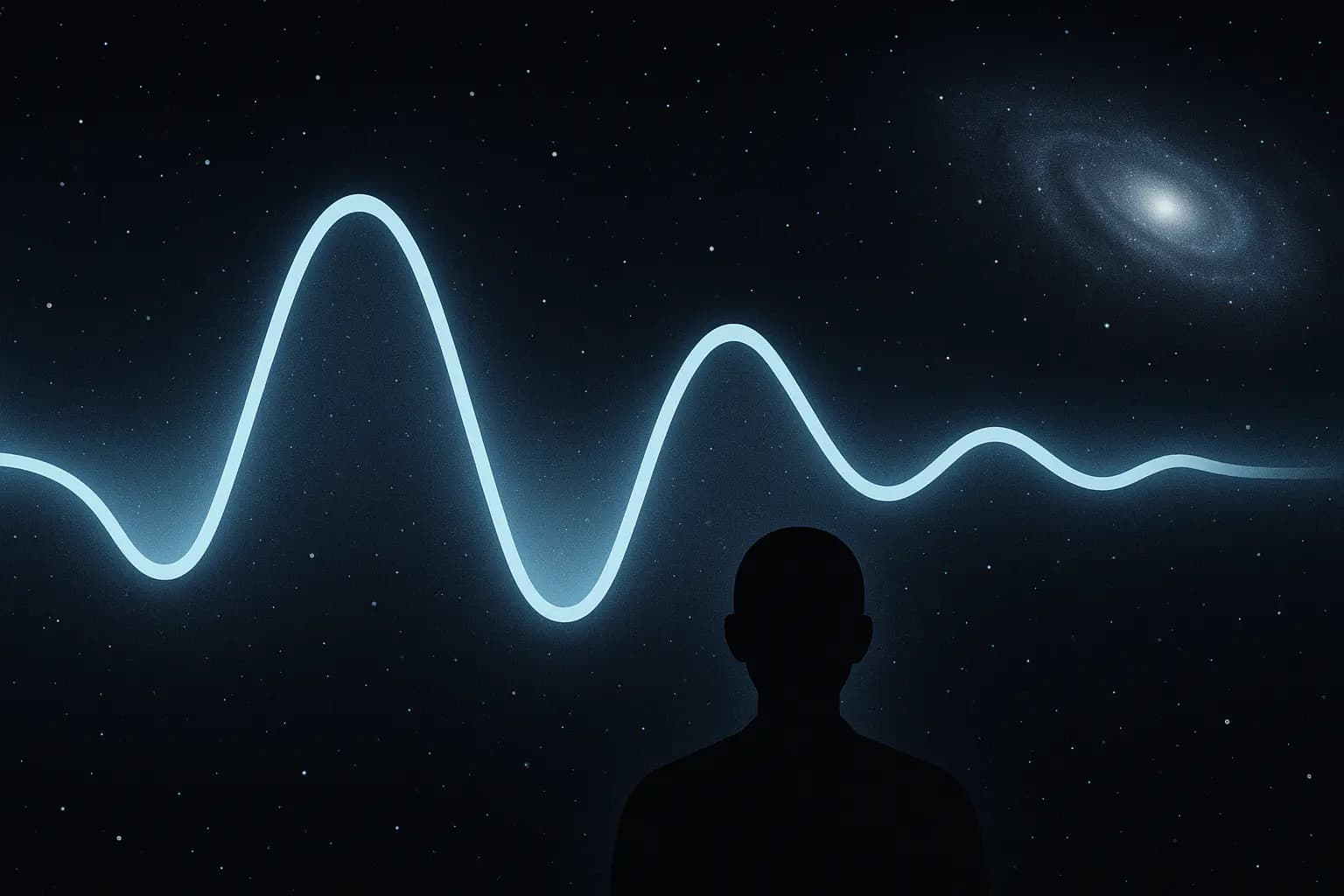
Luck has always been humanity’s favorite mystery. For centuries, we’ve treated it as pure chance - an invisible coin toss of the universe. But quantum physics, the science of the smallest building blocks of reality, is beginning to dismantle that idea.
Modern experiments suggest that what we call “randomness” may actually depend on the observer.
In other words, the universe might not be completely neutral — it responds to how we look at it.
If that’s true, then luck is no longer accidental. It becomes a measurable consequence of observation itself.
The Physics of Randomness
In the quantum world, nothing has a definite position or direction until it’s measured.
Before measurement, every particle exists in multiple possible states at once - a phenomenon called superposition.
This was most famously shown in the double-slit experiment.
When electrons are fired through two tiny slits, they form an interference pattern - behaving like waves that go through both slits simultaneously.
But when scientists try to measure which slit the electron goes through, the pattern disappears.
The electron suddenly behaves like a single particle.
Observation changes the result.
Measurement itself alters the system.
The Observer’s Role
In classical physics, the observer simply records what happens.
In quantum physics, the observer becomes part of the experiment.
Every act of observation changes the probabilities within the system.
That realization shattered the idea of objective randomness.
As Niels Bohr said, “No phenomenon is a phenomenon until it is observed.”
And Hugh Everett’s Many Worlds theory went further, suggesting that every possible outcome occurs - just in separate universes.
Either way, the observer can never be separated from the outcome.
The Oxford Experiments
In 2019, physicists at Oxford University revisited the double-slit setup using high-precision electron detection.
They found that particles behaved differently depending not only on observation, but on whether the observer knew what to expect.
Knowledge alone influenced outcome.
If the observer was aware of the possible path, the system changed.
If not, the system behaved as if unobserved.
Information altered reality.
And randomness became contextual.
This principle is known as quantum contextuality - the idea that measurement outcomes depend on how and what you choose to measure.
The Death of Pure Randomness
If outcomes depend on the questions we ask, randomness cannot be truly neutral.
Quantum contextuality shows that even chance is shaped by context.
What looks like chaos may be a hidden order that our perspective simply can’t see.
Extend this beyond physics - to human life, decisions, and “luck” - and the implications are profound.
Luck becomes a reflection of observation.
We change the outcome by expecting it.
The Psychology of Luck
In psychology, this is echoed in the self-fulfilling prophecy effect.
Our expectations guide our behavior, and our behavior shapes results.
When you believe failure is inevitable, your brain unconsciously filters out signals of opportunity.
When you expect success, you notice chances others miss.
Your perception doesn’t alter the physical world directly, but it changes how you interact with it - and that changes the odds.
In both quantum physics and psychology, one truth holds: the observer always matters.
Physics, Not Magic
The observer effect isn’t mystical.
It’s about information, not “energy” or thought waves.
In quantum mechanics, every new piece of information changes the system’s state.
The act of knowing reshapes probabilities.
That, in essence, is what we call luck - a change in outcome driven by new information, perception, and interaction.
Conclusion
Quantum physics shows that pure randomness doesn’t exist.
Reality is shaped by observation, and observation depends on expectation.
Luck, then, isn’t just coincidence.
It’s the meeting point between physics, information, and perception - between what happens and how we choose to look at it.
The next time you call something “luck,” remember: maybe the universe didn’t flip a coin.
Maybe it simply answered your gaze.